The Fire Temple
Project Overview
The goal of this project was to create a powerful opening video for the Calgary Flames that would intimidate, energize, and set the tone before puck drop. Like all Flames openings, it needed to immediately engage the crowd and elevate the in-arena atmosphere.
Director of Game Presentation Austin Shaw introduced the core concept early on: fire needed to feel dangerous, intimidating, and alive. From there, I proposed a narrative-driven approach that treated fire not just as an effect, but as a force that awakens something beneath the Saddledome itself.
This video lives at the very start of the game presentation. It is the moment where anticipation turns into emotion and the building comes alive.
Creative Concept
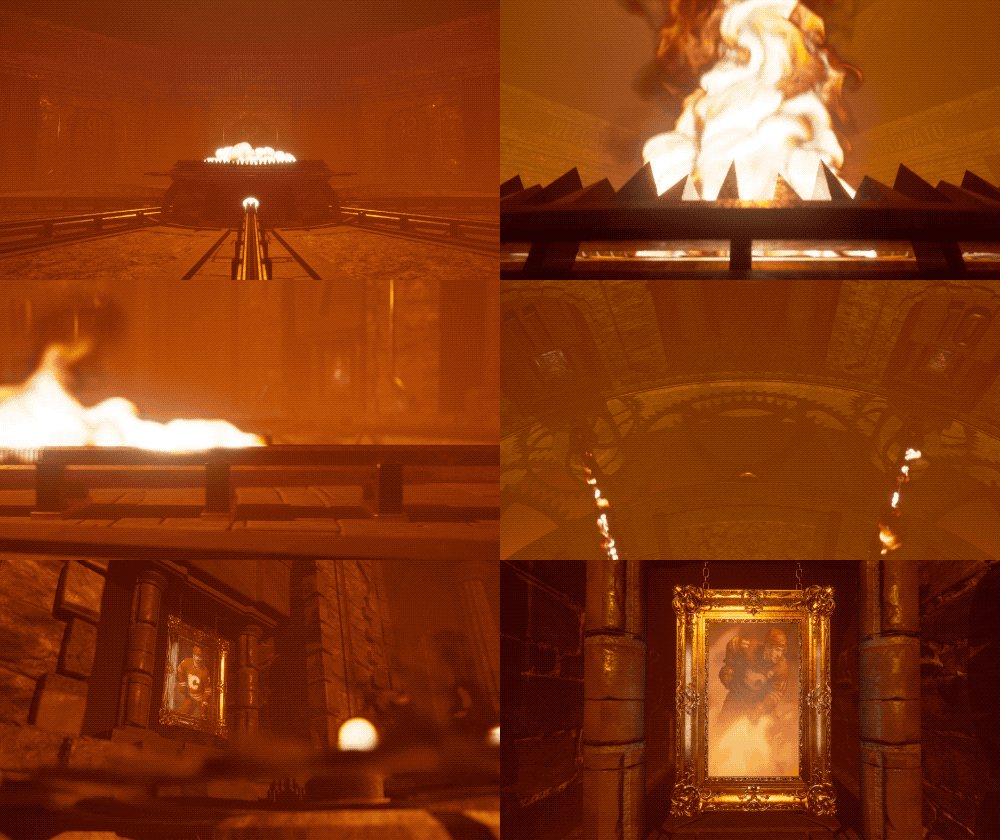
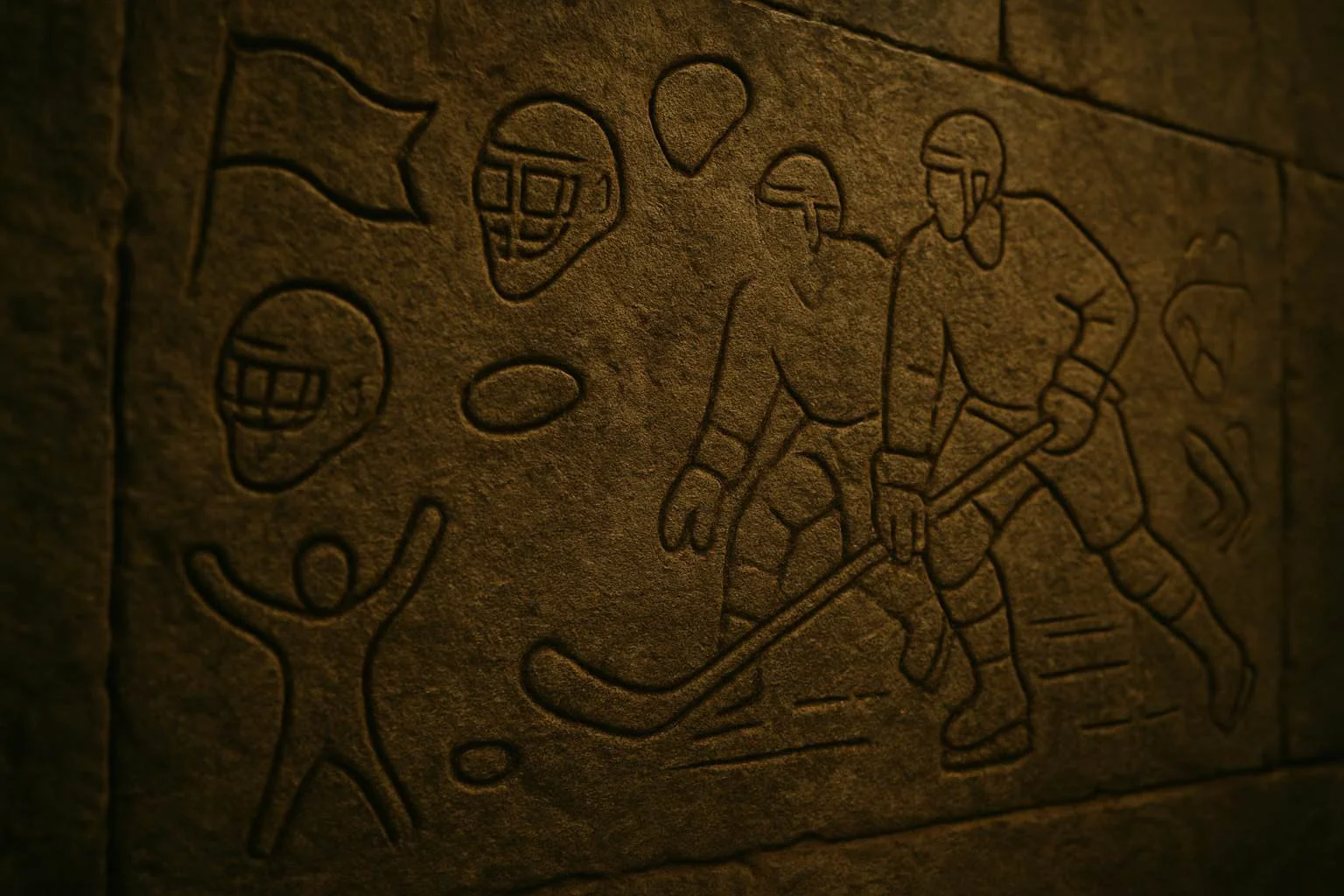
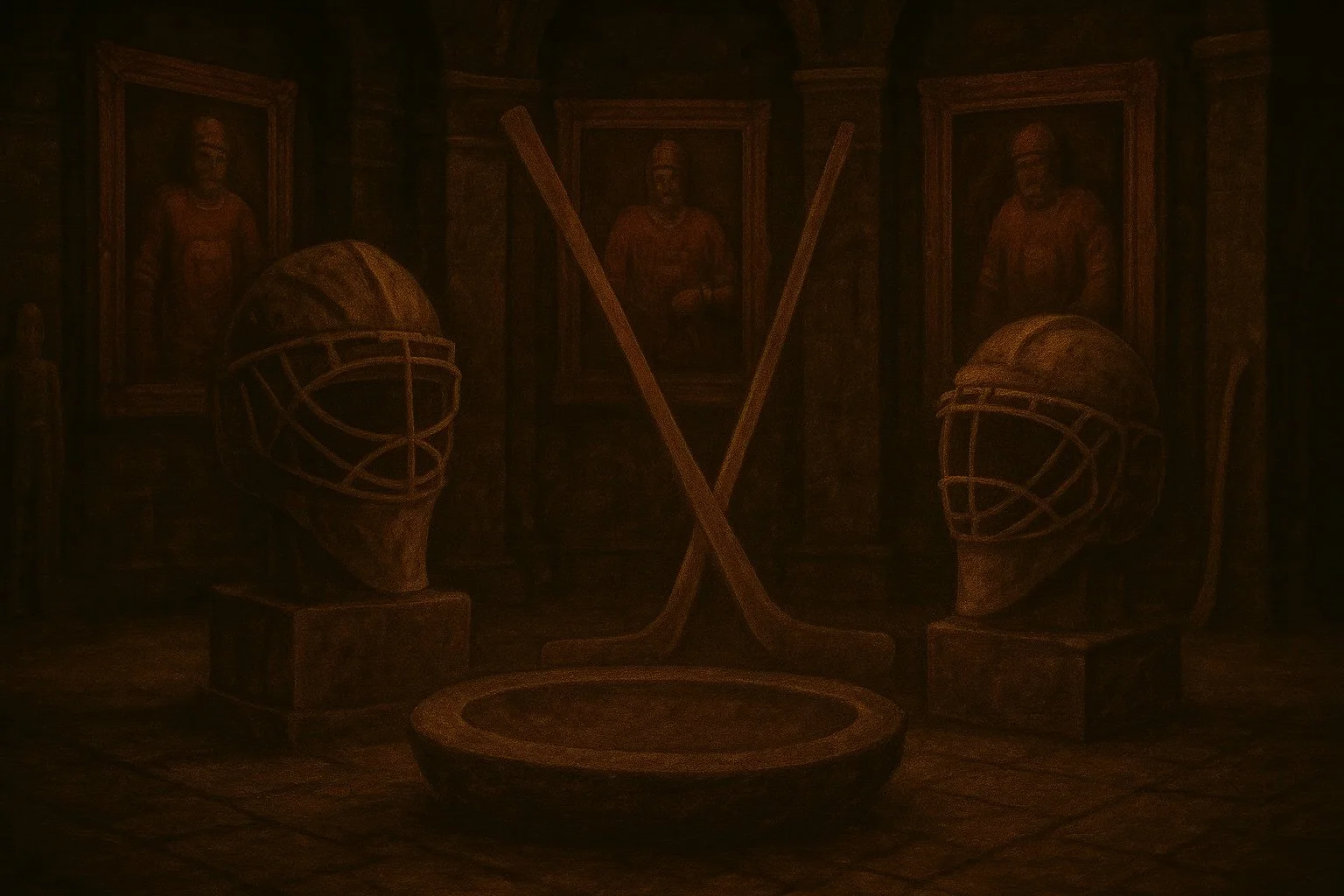
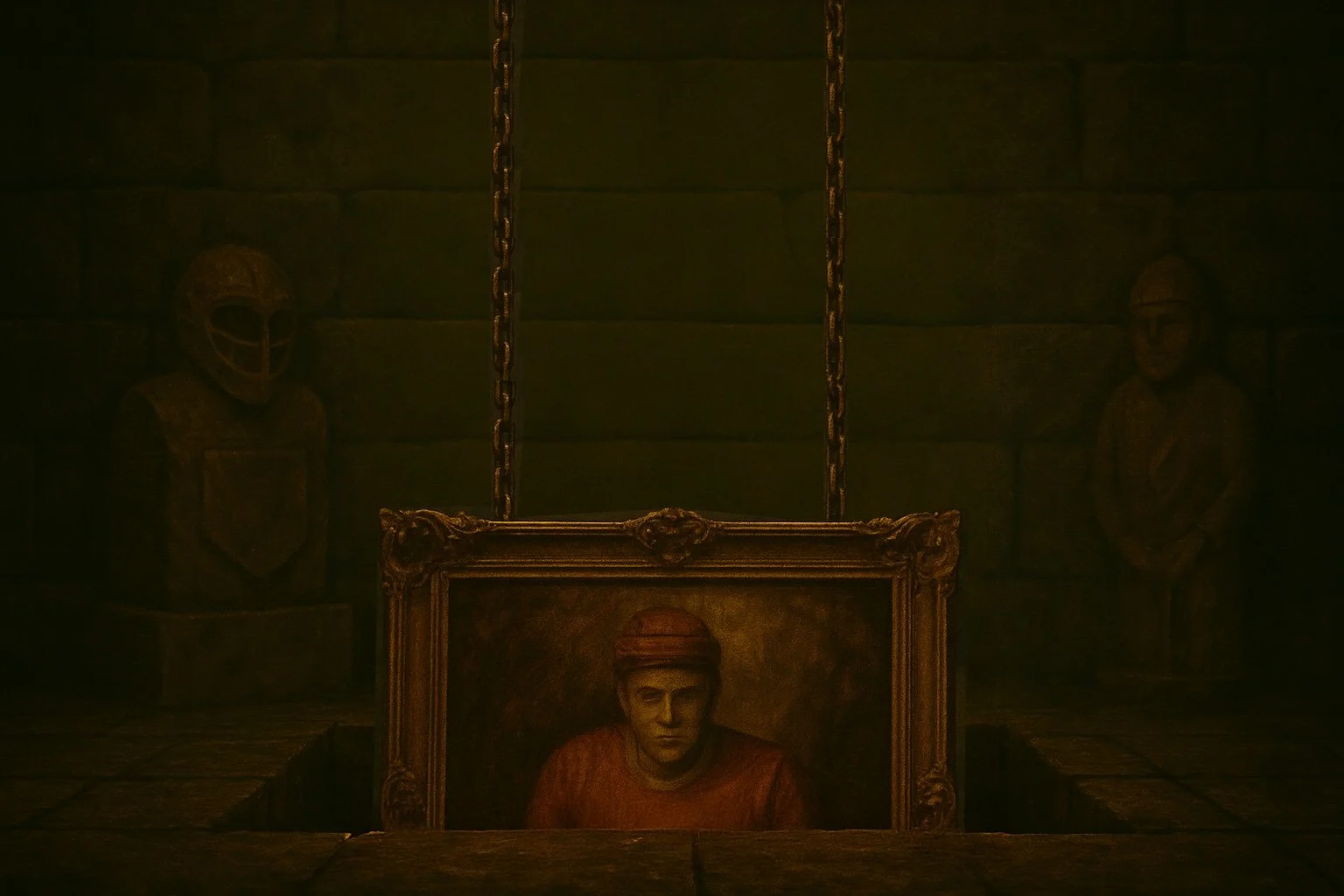
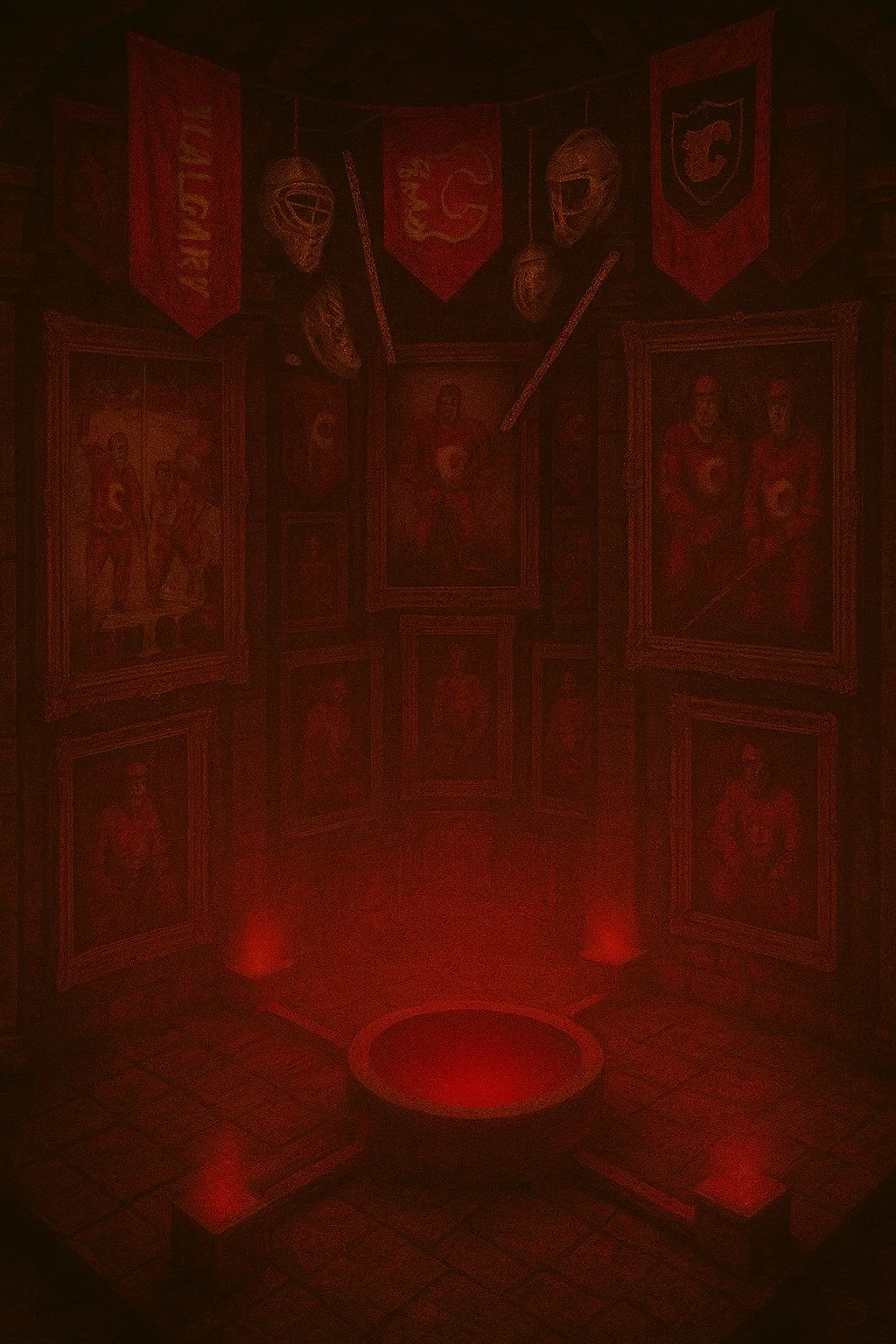
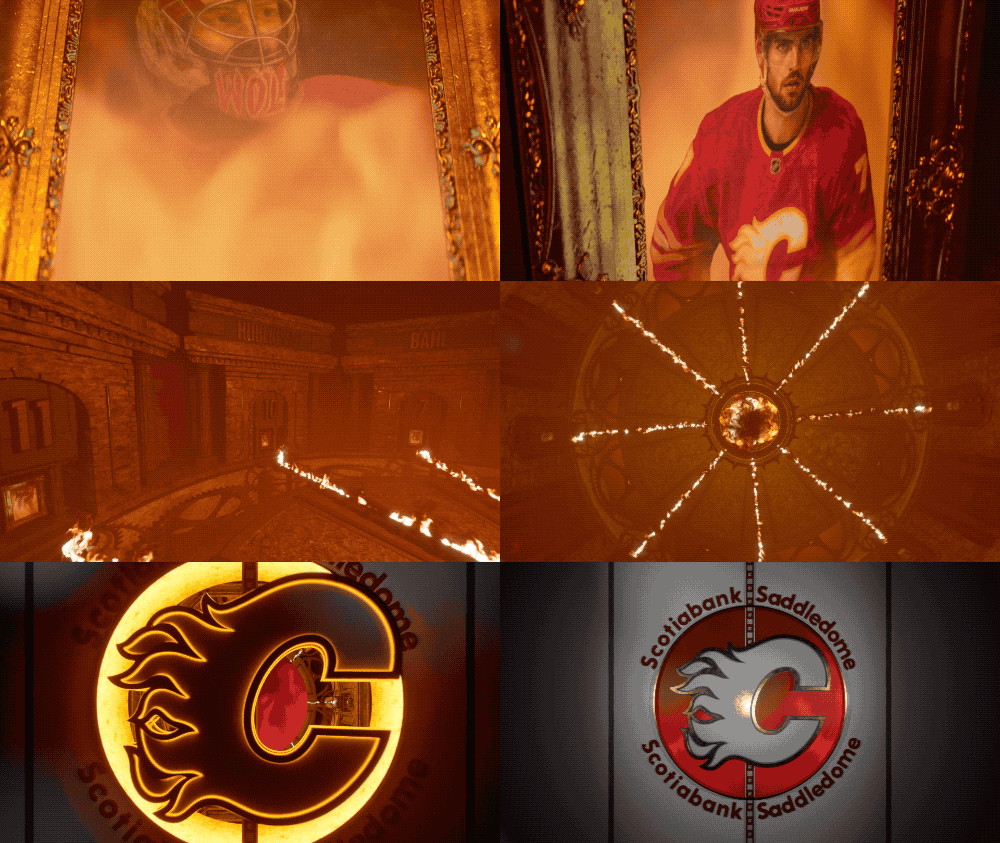
The foundation of the piece is a fire temple hidden beneath the Saddledome. The idea was inspired by my lifelong love of video games, specifically Zelda, and the concept of awakening something ancient and powerful.
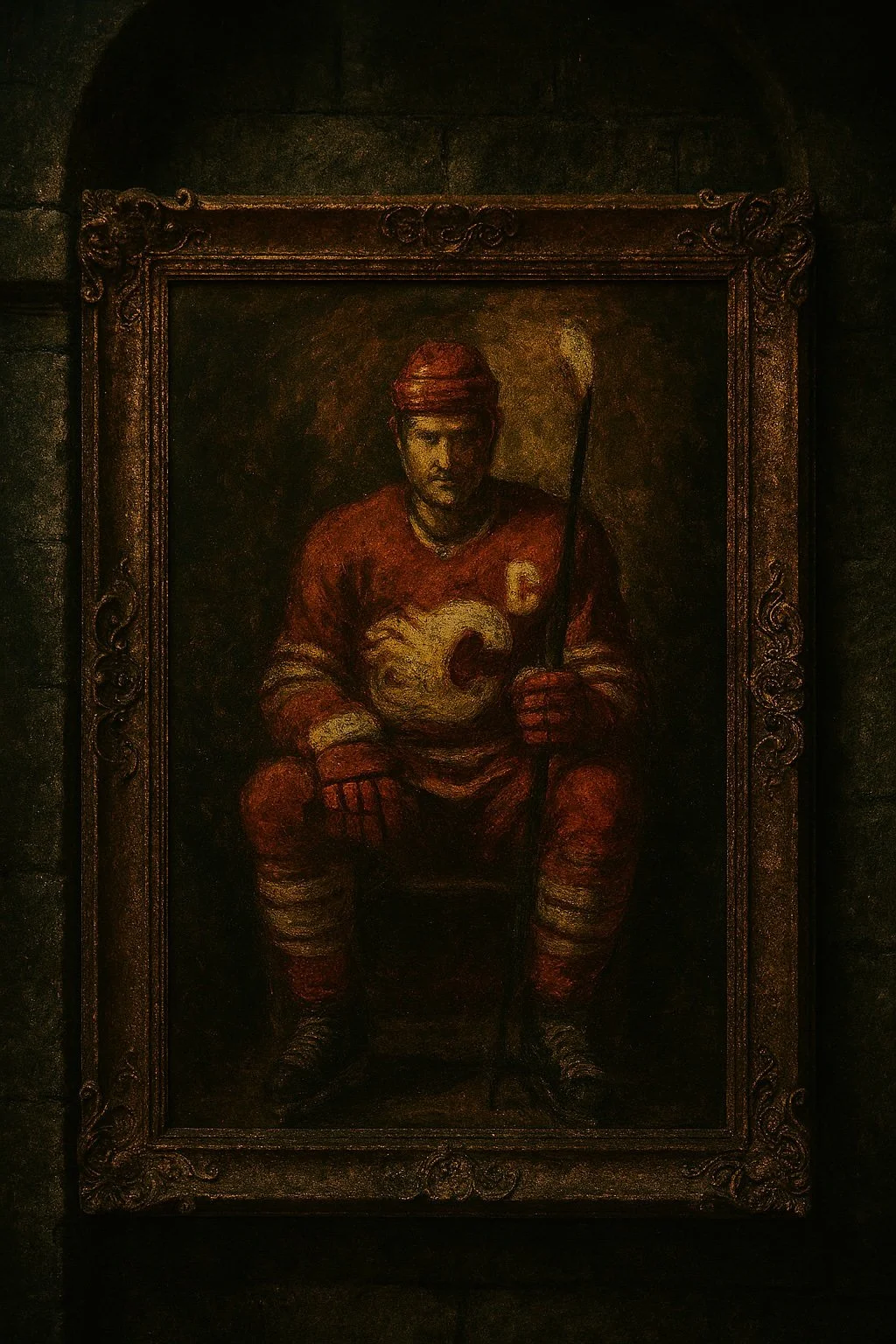
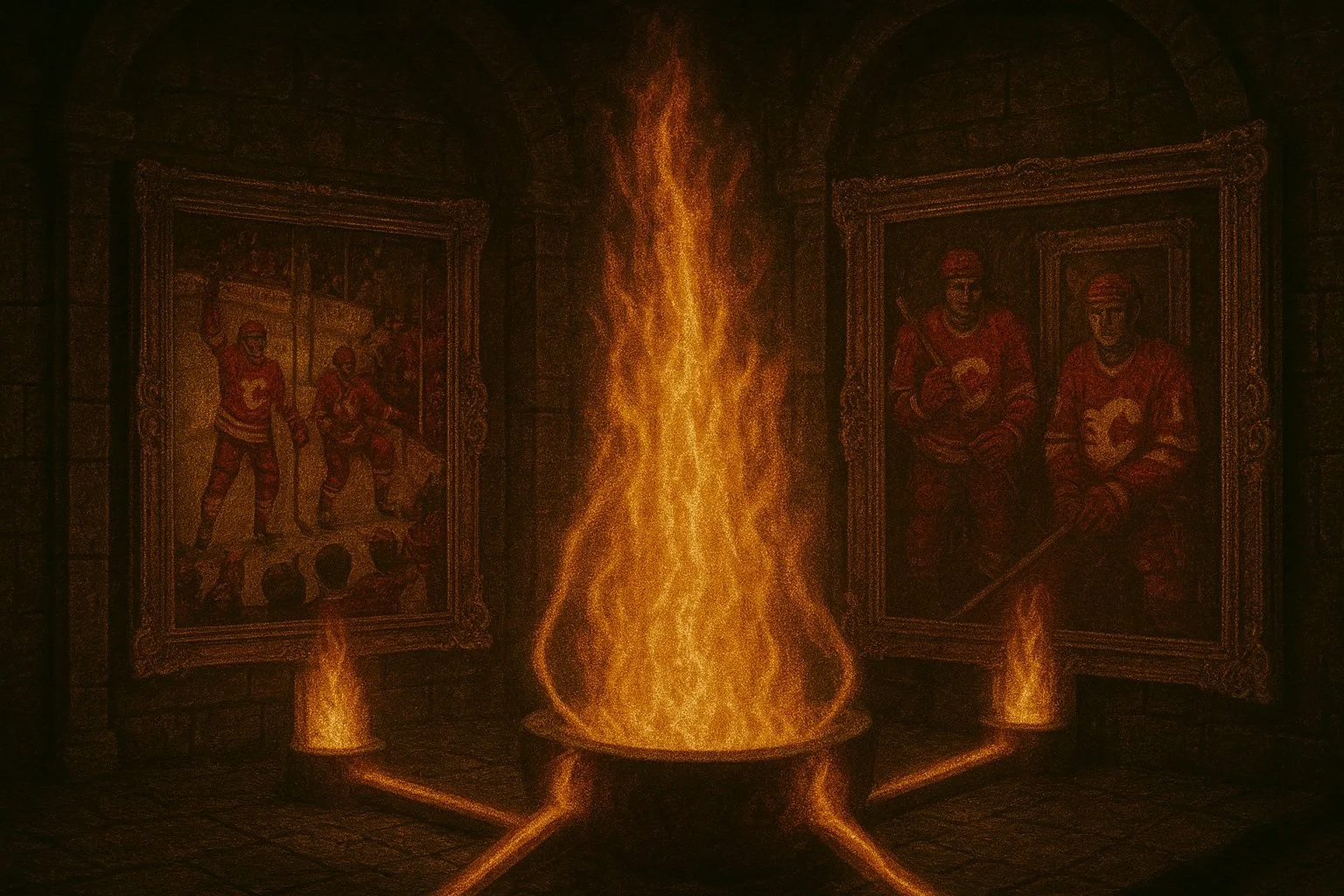
The sequence begins as a slow burn. Gears start turning. The temple activates. Framed portraits of Flames leadership players descend from above, rendered in a painterly, Goya-inspired style. As the temple comes to life, fire erupts from the central pit and travels outward, igniting each frame and transferring energy into the players.
This ignition represents the C of Red coming alive.
The fire then rises through the ice surface and transforms the new center-ice dot into a fully red mark, as if the heat from below has permanently altered it. This was a new visual idea for the Flames and helped anchor the lore of the Saddledome itself.

Unreal Engine 5 & Technical Approach
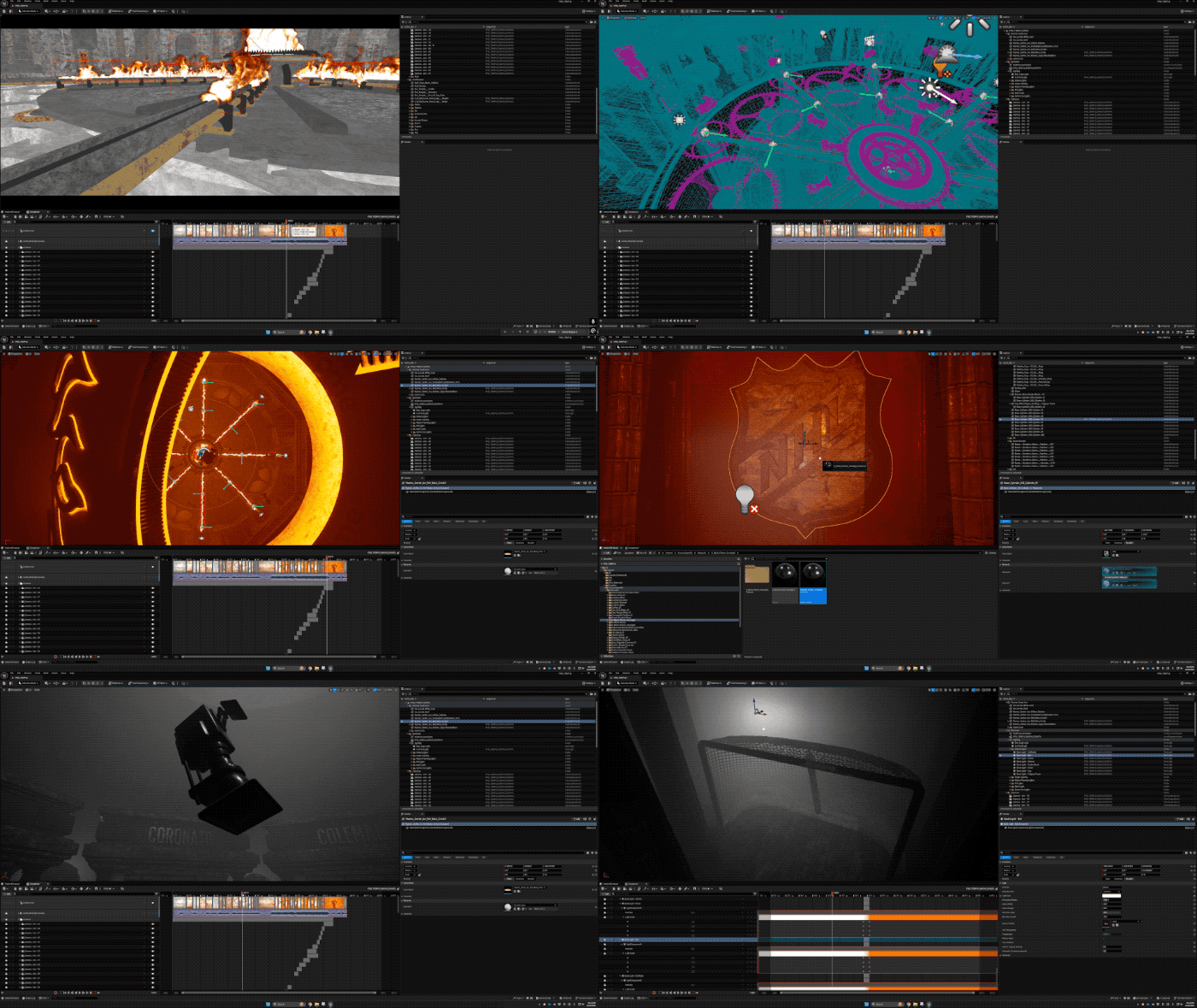
I chose Unreal Engine 5 because it allowed me to work in real time. Fire simulations, lighting, camera movement, and sequencing were all adjustable on the fly. What would have taken weeks of rendering in a traditional pipeline could be iterated on in hours.
The final deliverables were rendered in 4K as EXR sequences with cryptomatte passes. A comparable Cinema 4D render would have required significant render farm time or budget.
Cinema 4D was still a critical part of the workflow. I used it for modeling, asset prep, and FBX exports into Unreal. Each tool had a clear role, but Unreal Engine ultimately made the scope of this project possible within the timeline.
One area I focused heavily on was camera realism. Unreal allows you to define real sensor sizes, so I went deep into replicating anamorphic cinema lenses, including distortion, desqueeze, and lens imperfections. Using real-world camera behavior helped ground the CG and push it toward a cinematic feel, even though the piece intentionally leans into a video game aesthetic.
Huge credit to YouTuber Tiedtke for his tutorials and presets that helped make that workflow possible.
Player Shoot & Live-Action Integration
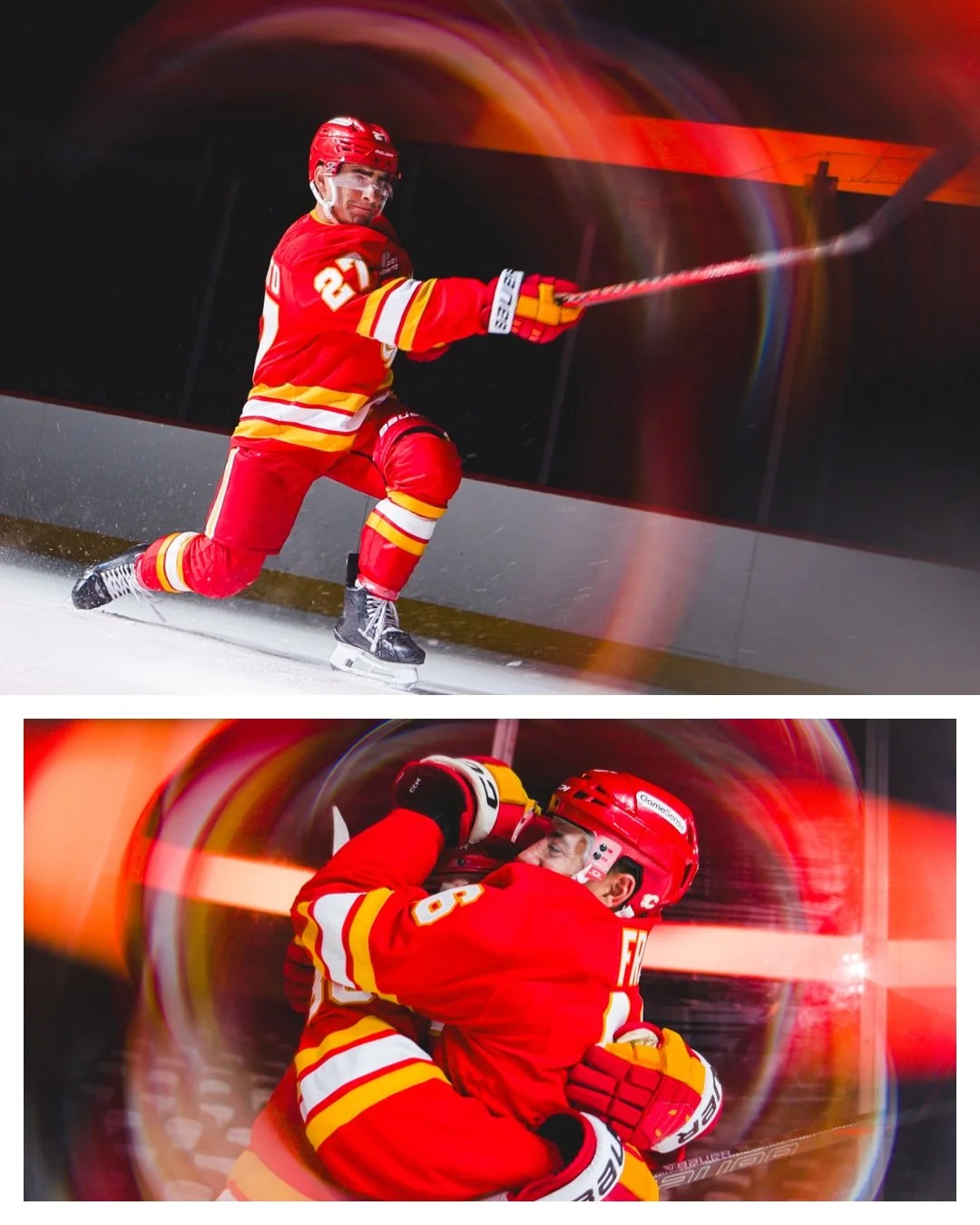
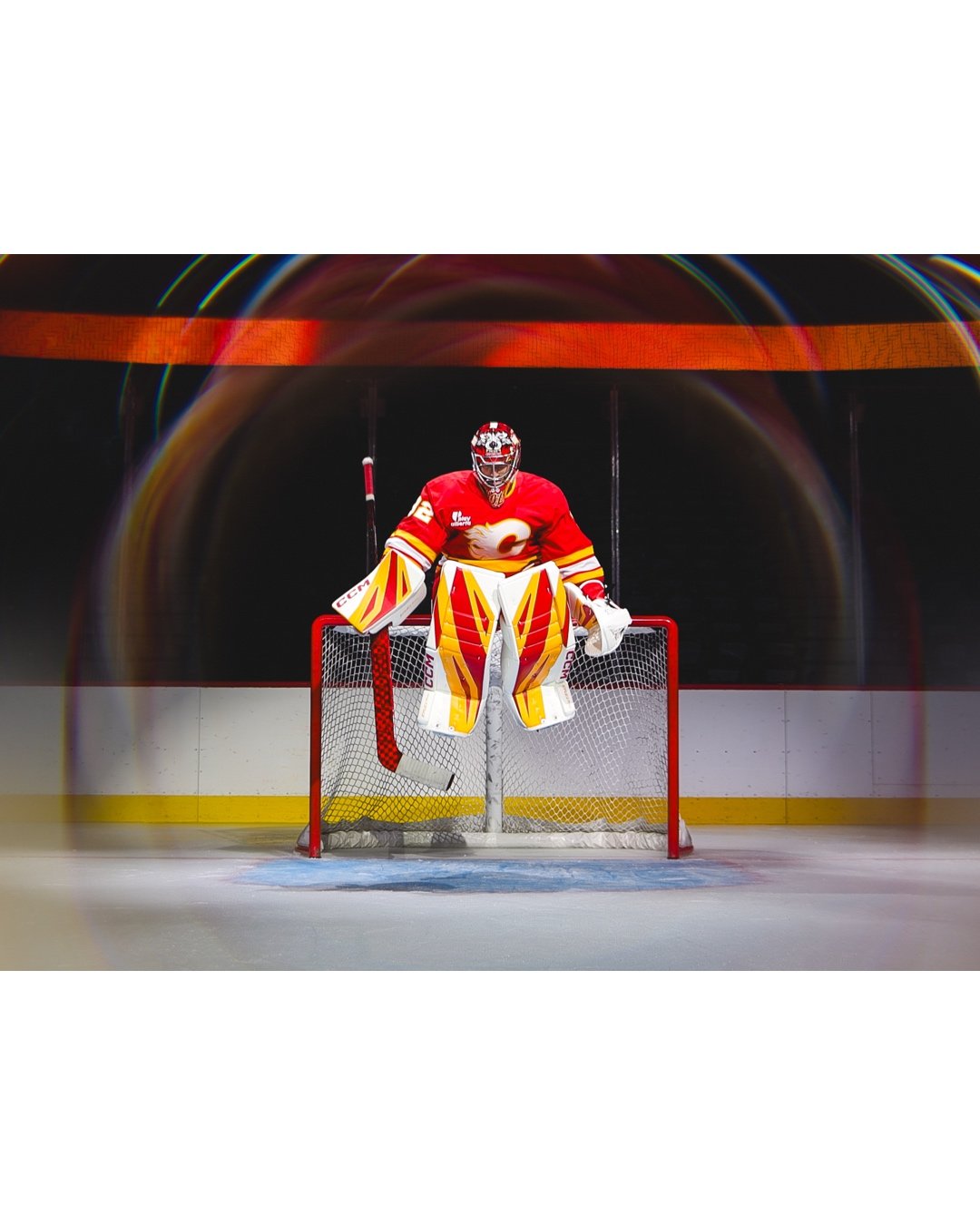
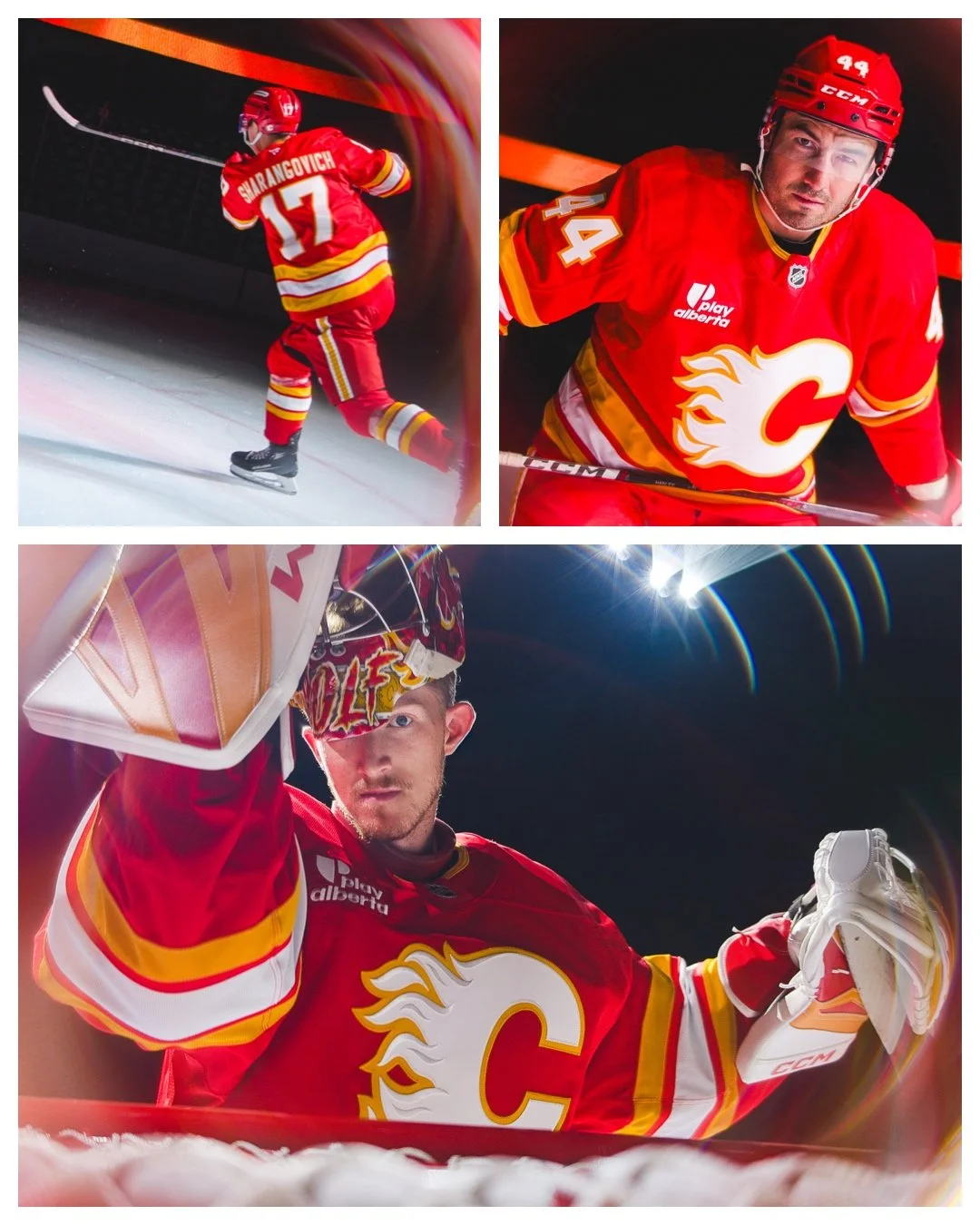
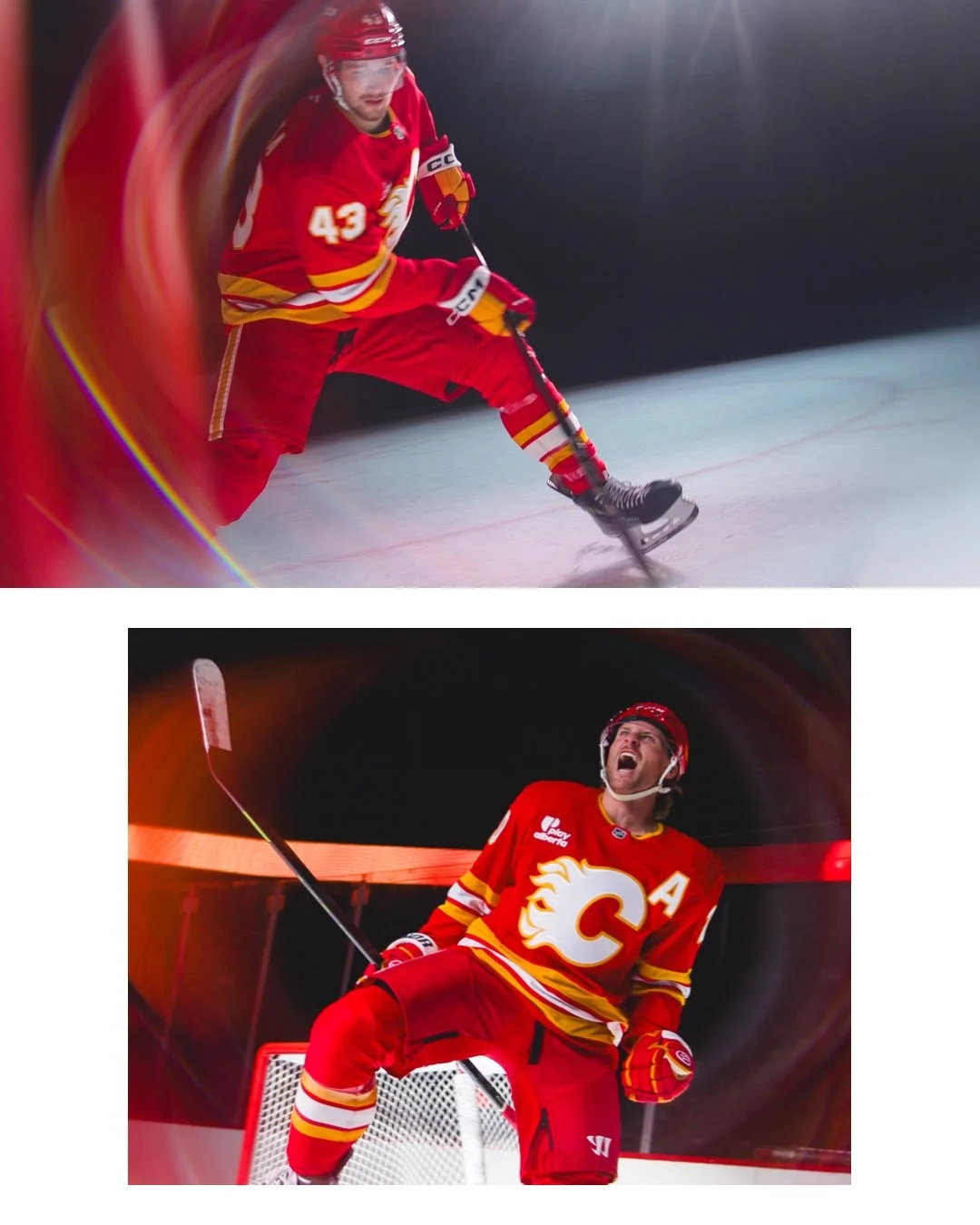
After the CG prelude, the video transitions into live-action footage captured during media day.
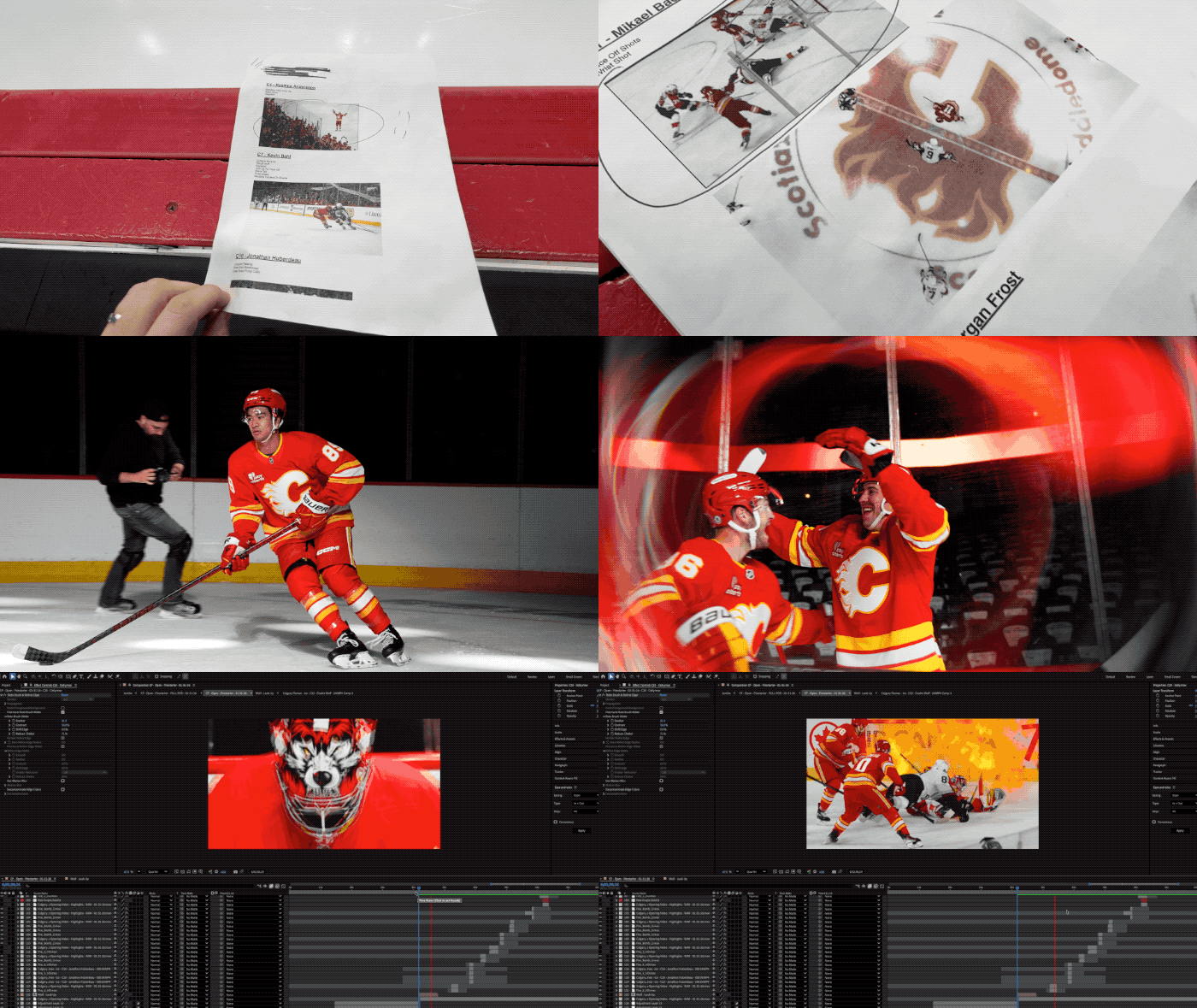
To plan this section, we reviewed highlights from the previous season and selected key plays for each player. Goals, saves, hits, and emotional moments became the blueprint. I printed reference frames and showed them to the players on the ice, asking them to help recreate those moments from a closer, more immersive perspective.
The intent was to show angles fans never normally see, then cut to the broadcast highlight to complete the story of the play. The structure mimics a video game camera system, switching perspectives while maintaining continuity.
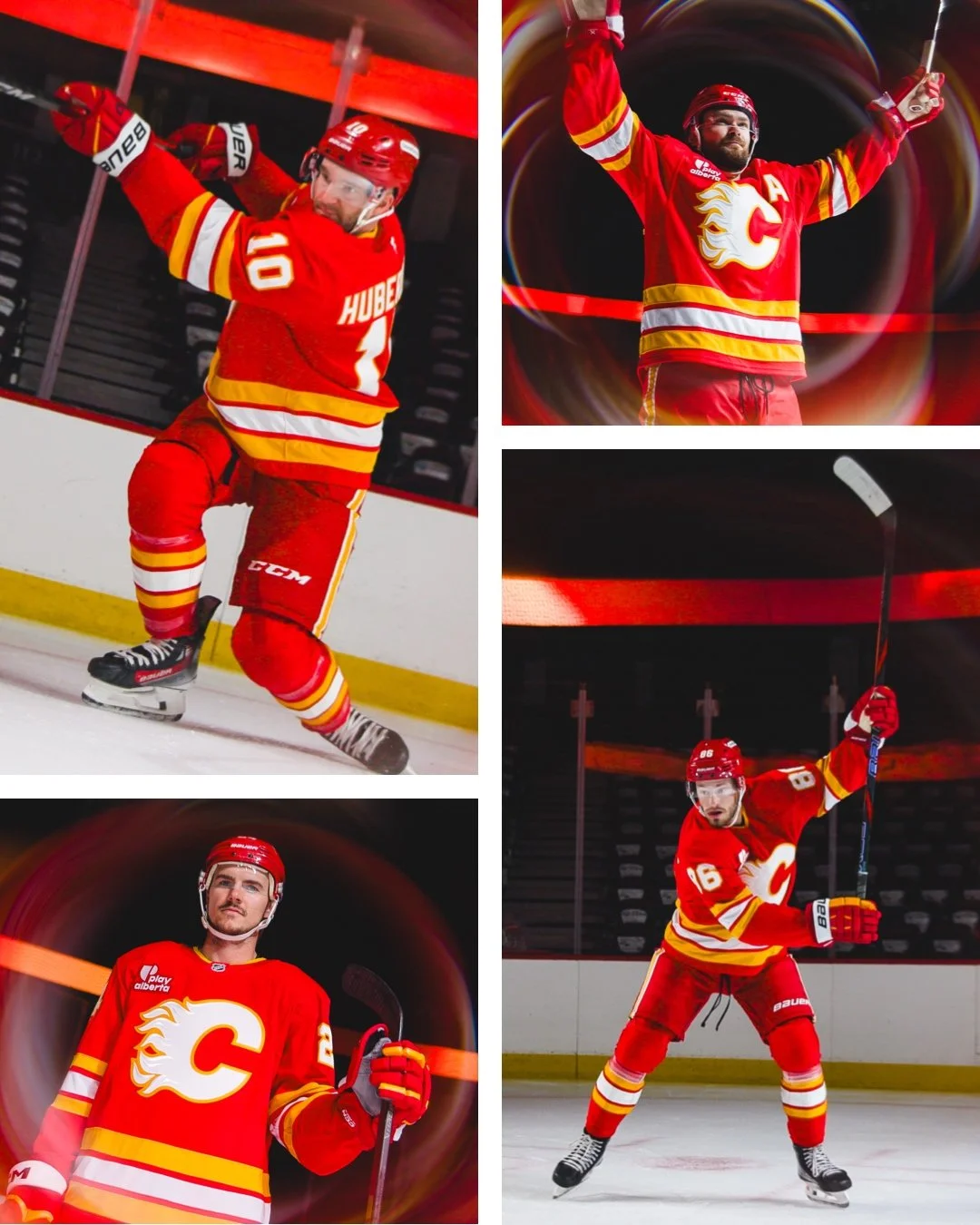
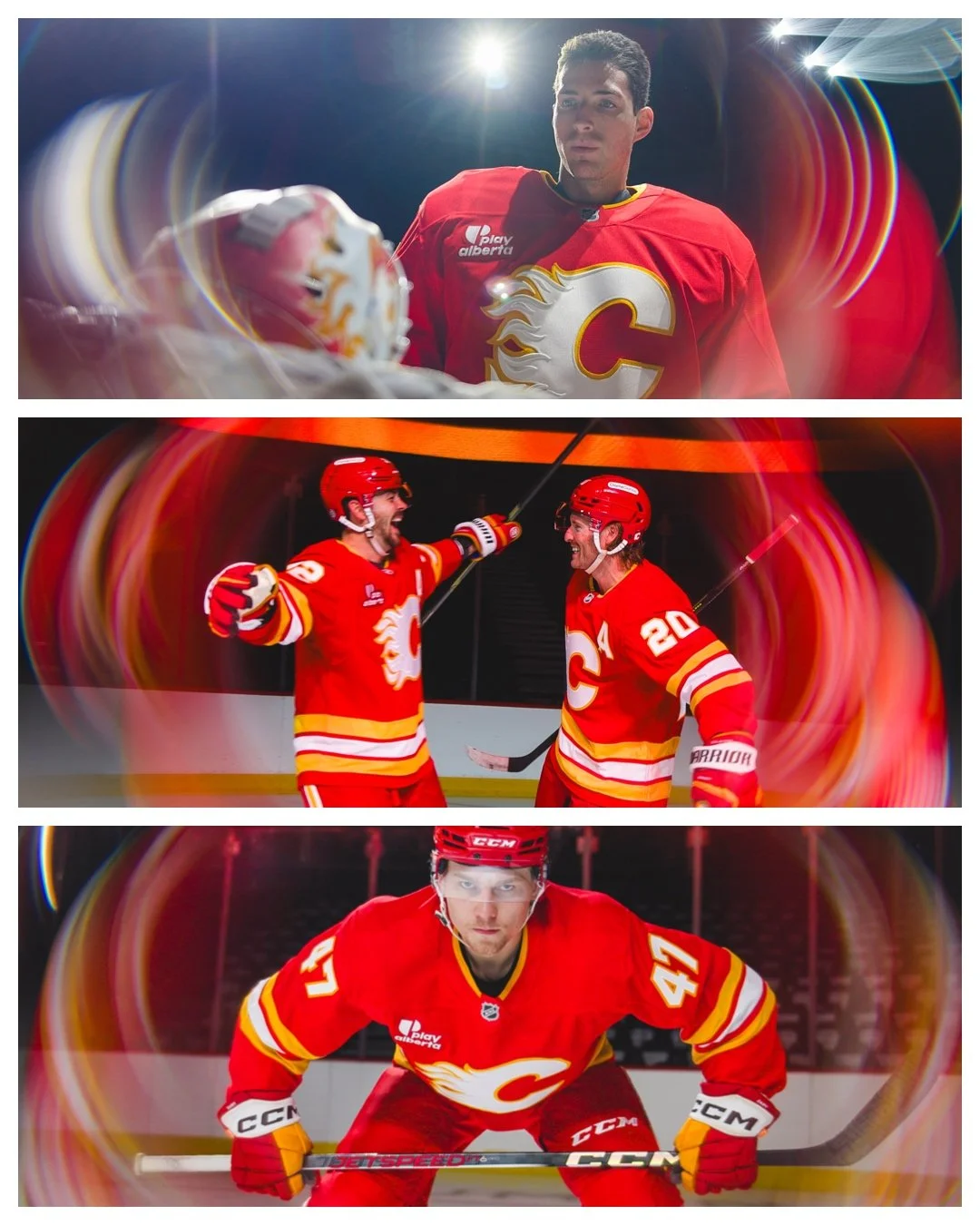
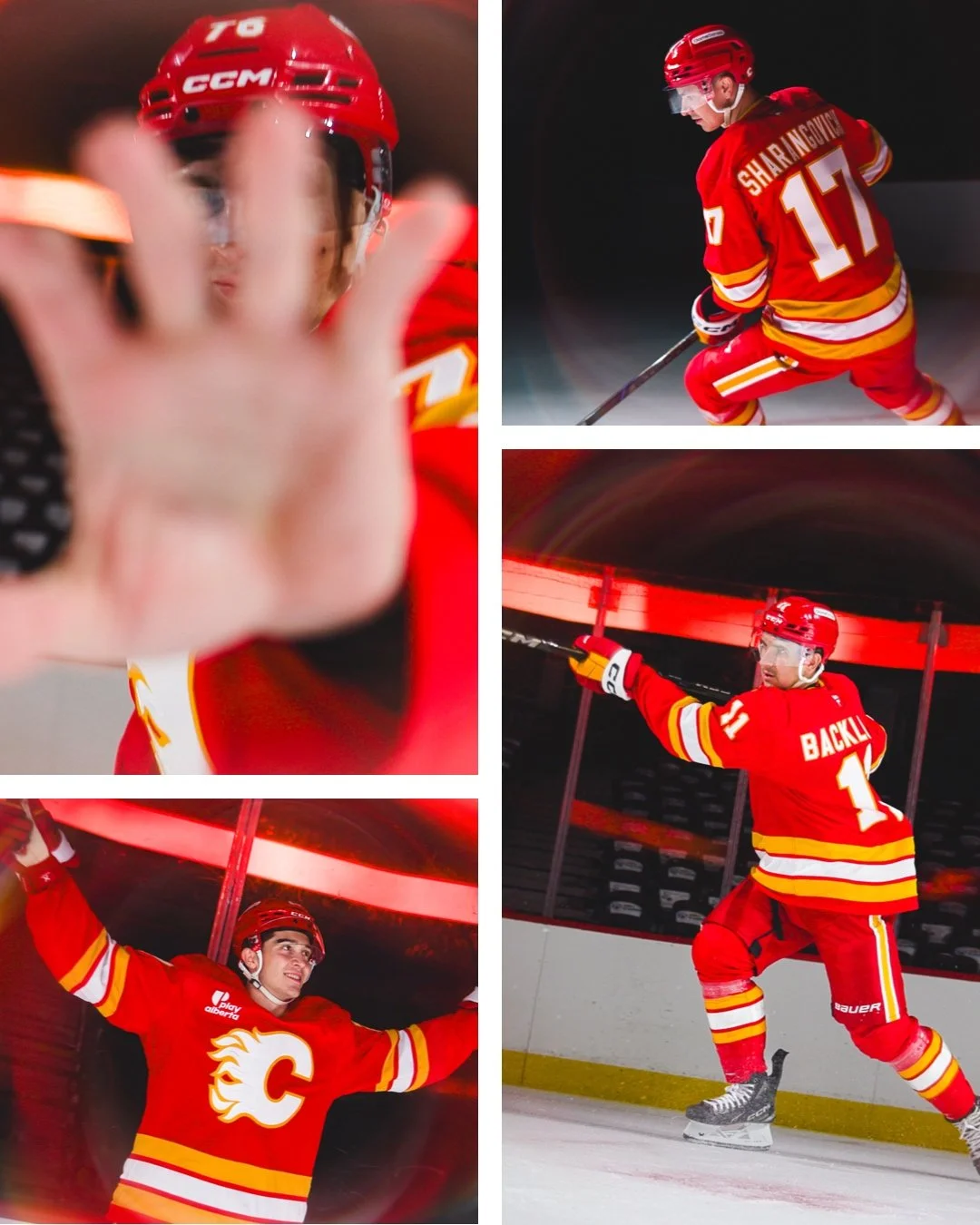
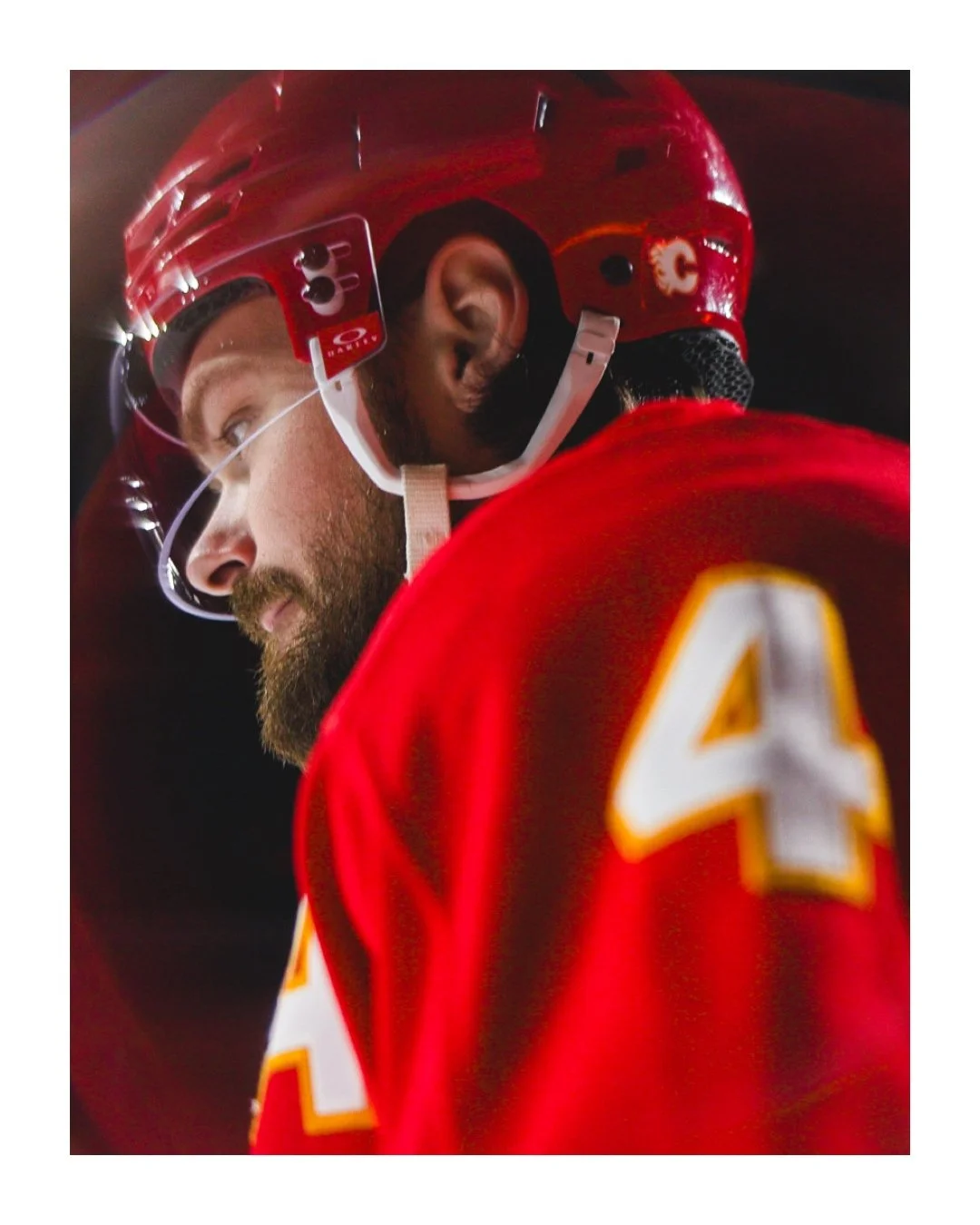
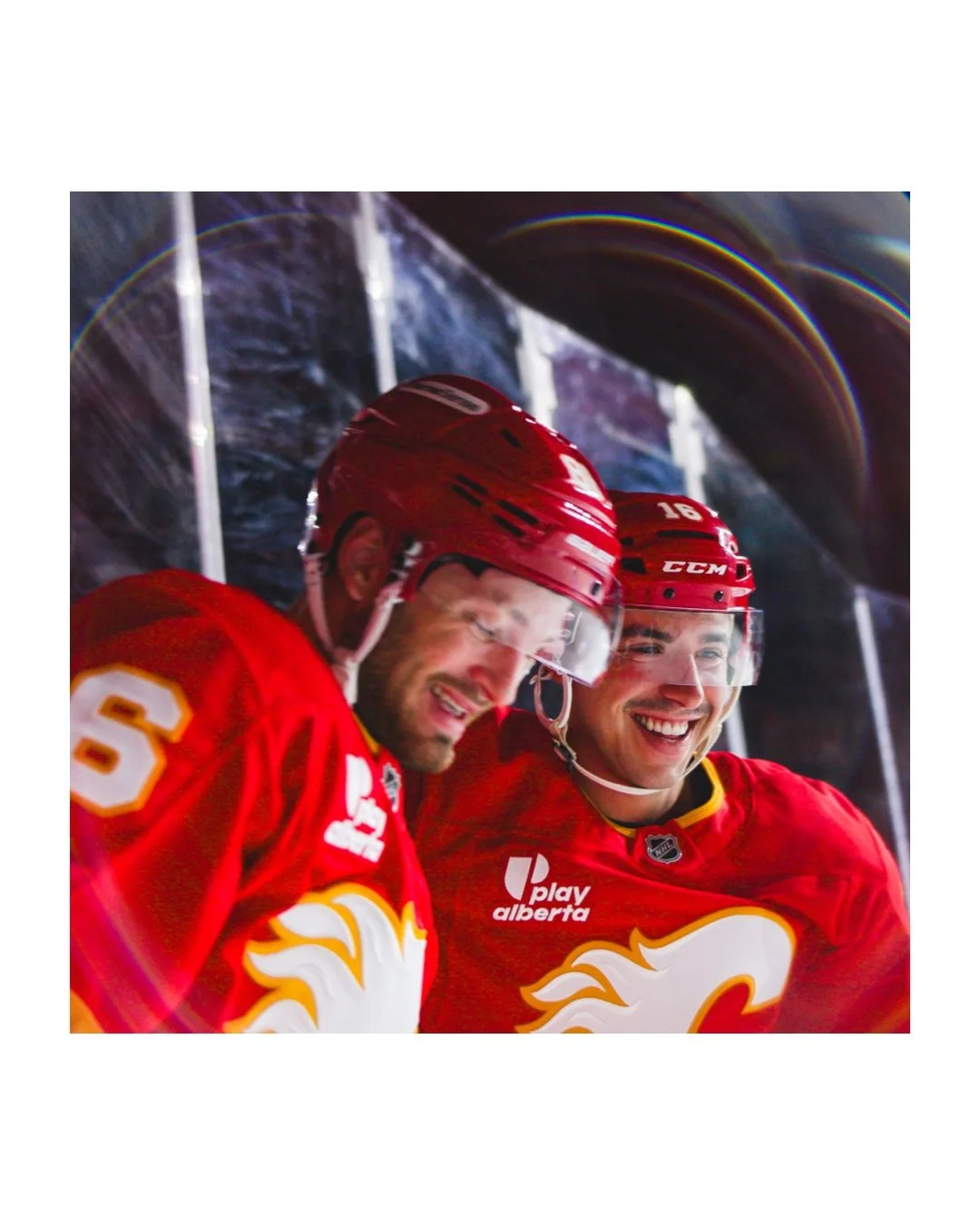
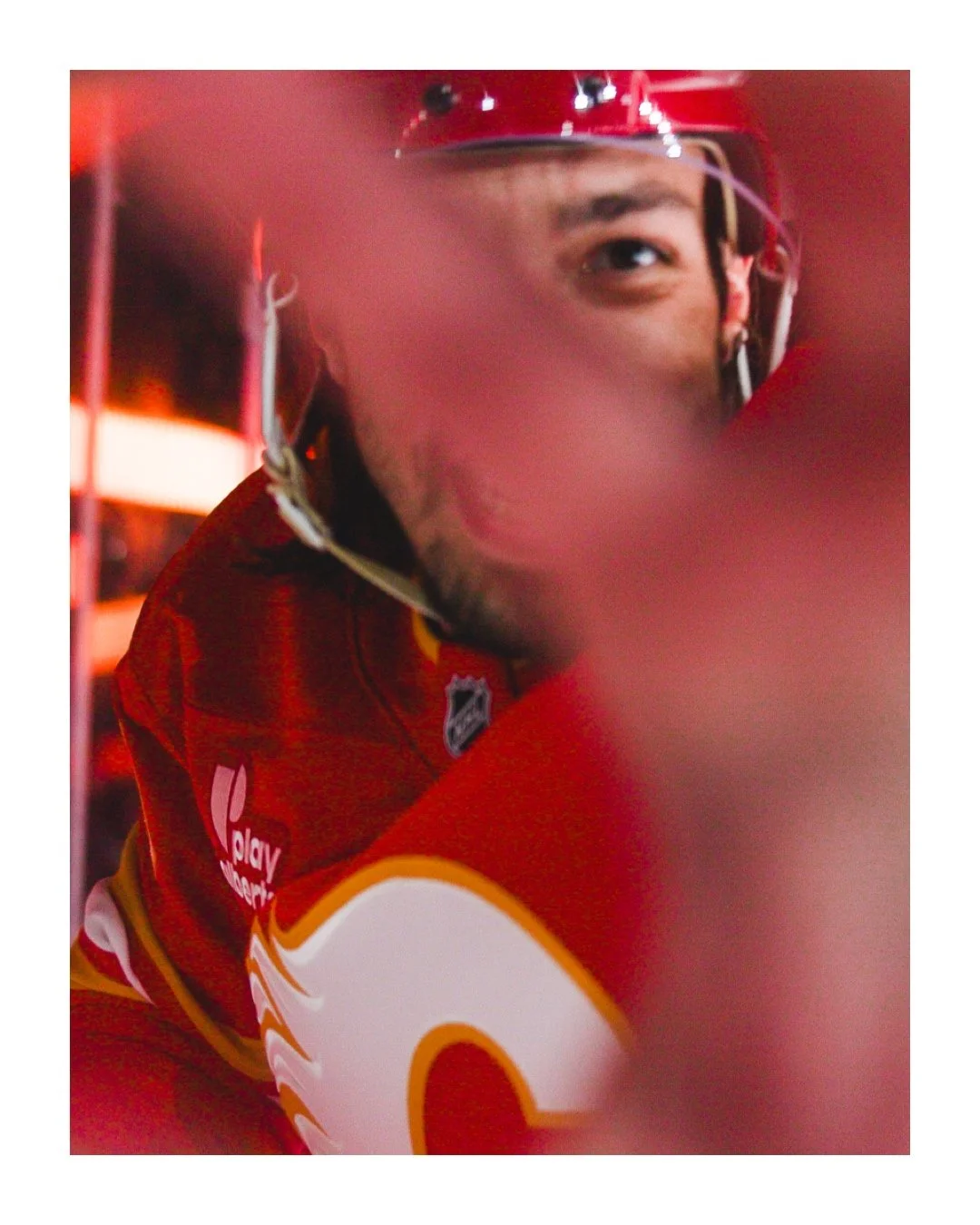
We had roughly five minutes per player, so simplicity was critical. I shot exclusively on a Canon R5 Mark II with an RF 35mm f1.8. The fixed focal length, image stabilization, and lighter setup allowed me to move quickly without slowing the players down. I also used a halo filter to add bloom and atmosphere, which helped soften the empty arena and tie into the Flames brand direction.
Lighting on the ice was handled by Darryl Gratton and Joseph Wolff from EK Productions, who built a rig above the ice that added depth and drama to the footage.
In-Game Player Headshots
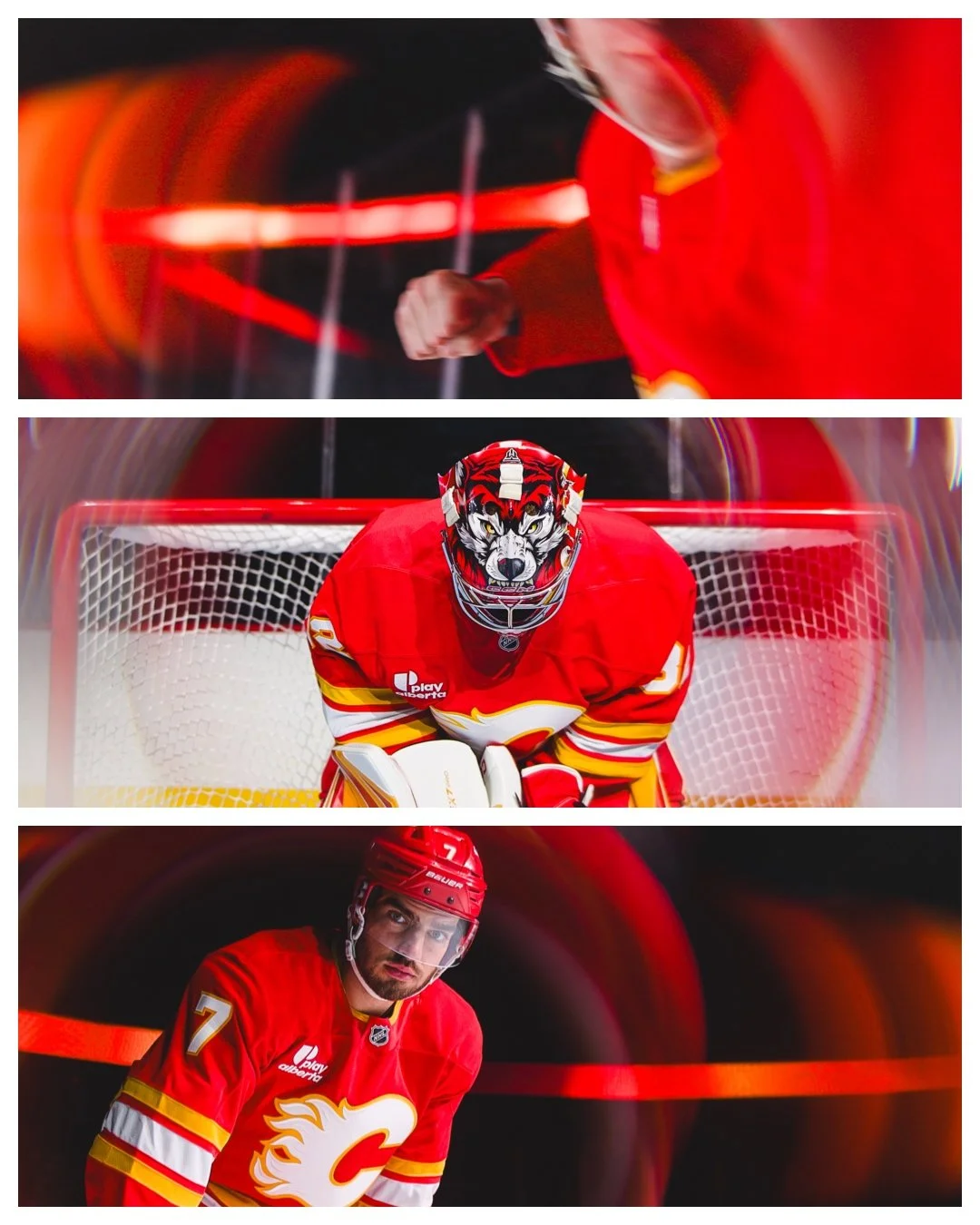
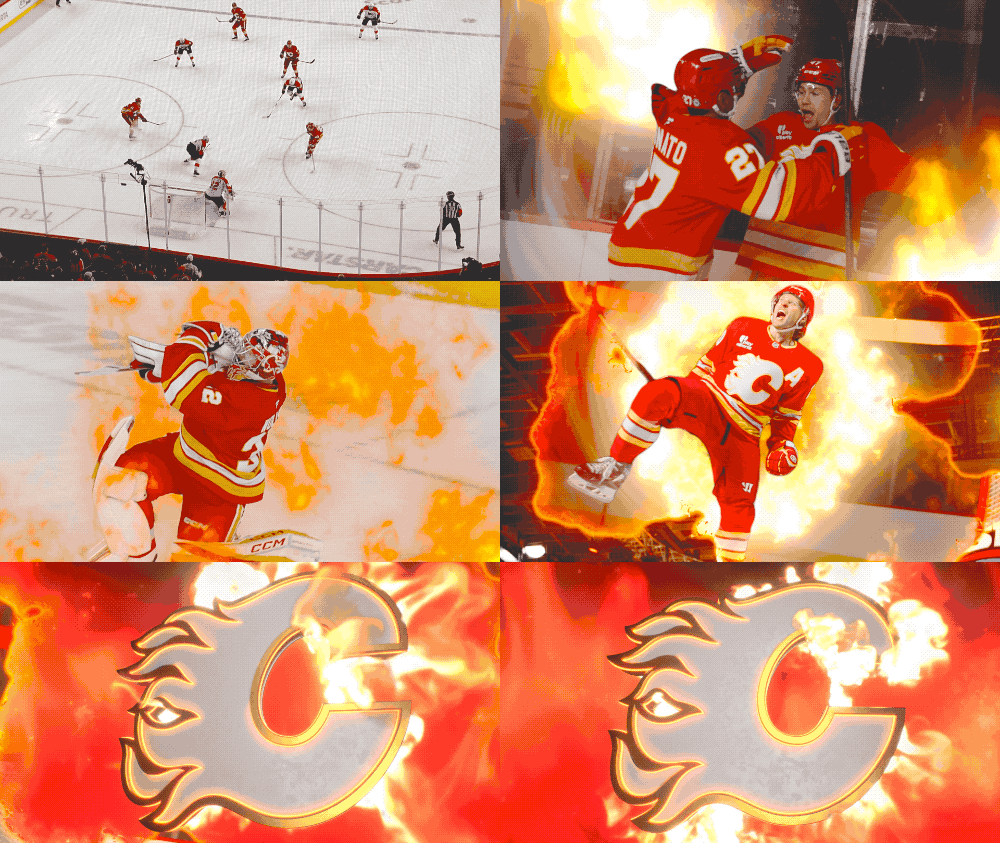
The on-ice footage captured during media day extended beyond the opening video and became the foundation for this season’s in-game player headshots.
Using the same immersive, video game-inspired approach, each headshot was built to feel intense and personal. The goal was to bring fans closer to the players, highlighting character and presence rather than traditional static portraits.
Additional fire elements were captured by Jessekiah Jost and his team, with players posing alongside real flame to reinforce the overall theme. Videographer Rob Stirling filmed the green screen tags that complete each headshot animation.
The opening video and headshot package were designed as a unified visual system, ensuring consistency across the entire in-arena experience.
What I’m Most Proud Of
I’m proud that leadership trusted a concept that, on paper, could have sounded risky. Zelda inspiration, ancient fire temples, and hockey do not obviously belong together, but the idea worked because it was rooted in story, not spectacle.
I’m proud that the players bought in completely and were willing to recreate moments, interact with each other, and trust the camera in close proximity.
I’m proud of the time spent learning Unreal Engine at a deeper level. The real-time pipeline opened new creative doors and fundamentally changed how fast ideas can move from concept to screen.
There are also personal details embedded in the temple. Statues representing an old goalie mask, the Calgary Tower, and a horse act as subtle nods to opening videos I have worked on in the past. They quietly reflect my journey as a motion graphic artist and the history built with my colleagues over the years.
Key Takeaway
This project reinforced something I believe strongly as a creative. You have to believe in your ideas, invest in yourself, and be willing to put in the hours before anyone else sees the value. The tools are changing fast, but storytelling, trust, and collaboration are still what make a piece work.
This opening video represents where game presentation is heading. Real-time 3D, cinematic storytelling, and live-action sports content are no longer separate worlds. They are becoming one.
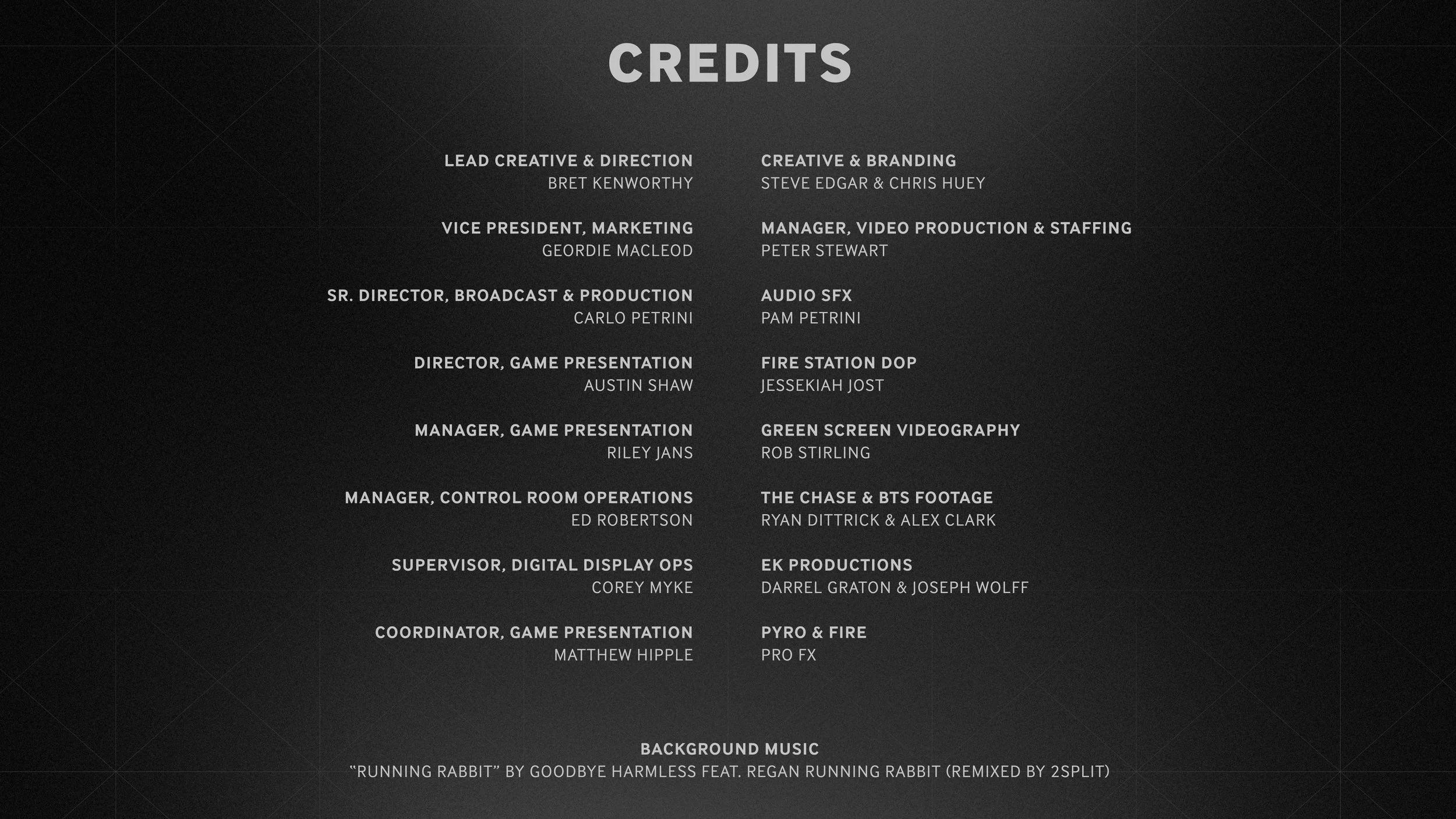
SPECIAL THANKS
A big thank you to Geordie Macleod, Austin Shaw, Steve Edgar, Riley Jans, Corey Myke, Ed Robertson, Matthew Hipple, Carlo Petrini, and Peter Stewart for their support, direction, and guidance.
Audio SFX by Pam Petrini.
Programs: Unreal Engine 5 + C4D + After Effects + Premiere Pro
Gear: Canon EOS R5 II + Canon 35mm RF 1.8 + Halo Filter
Video Still Frames
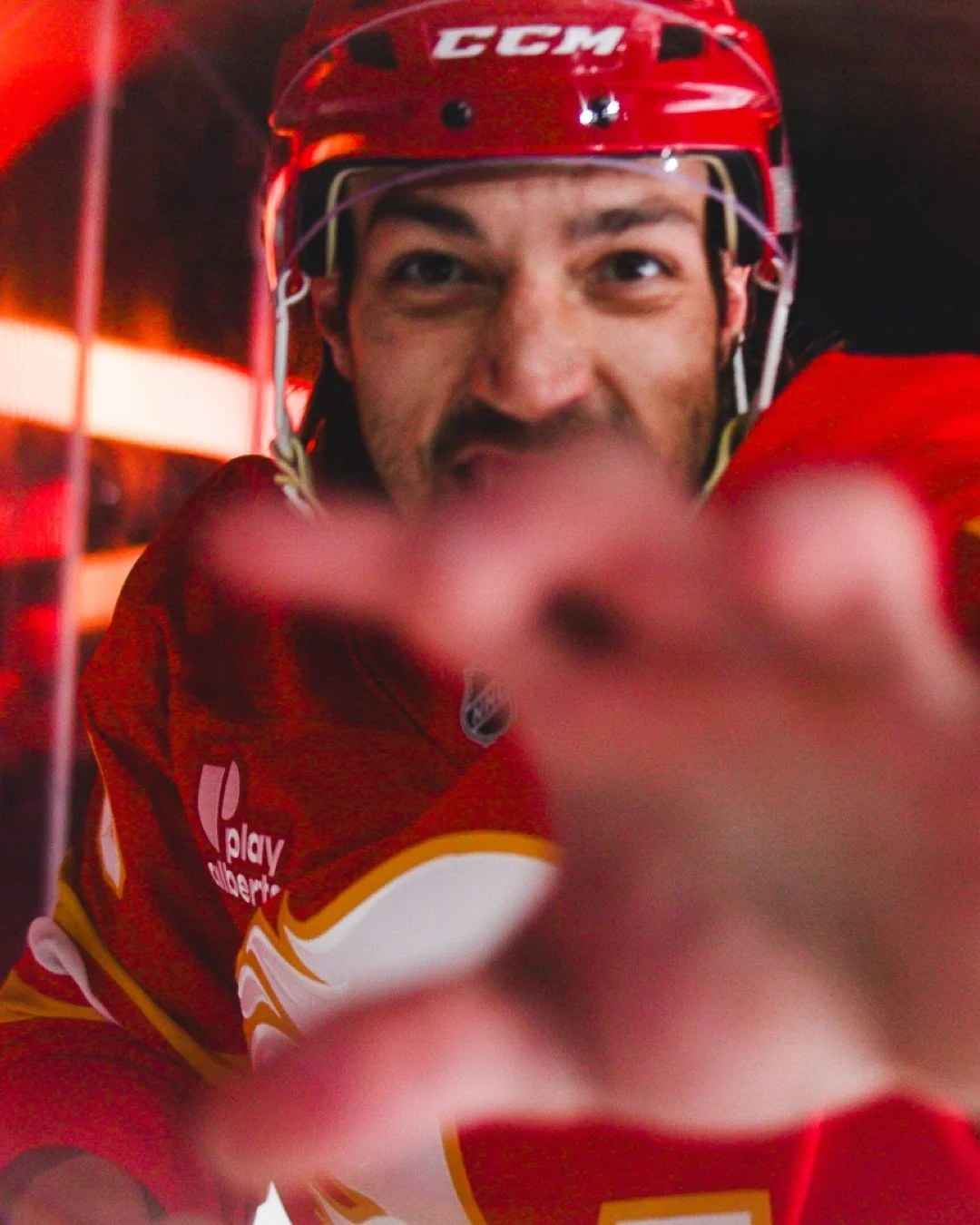
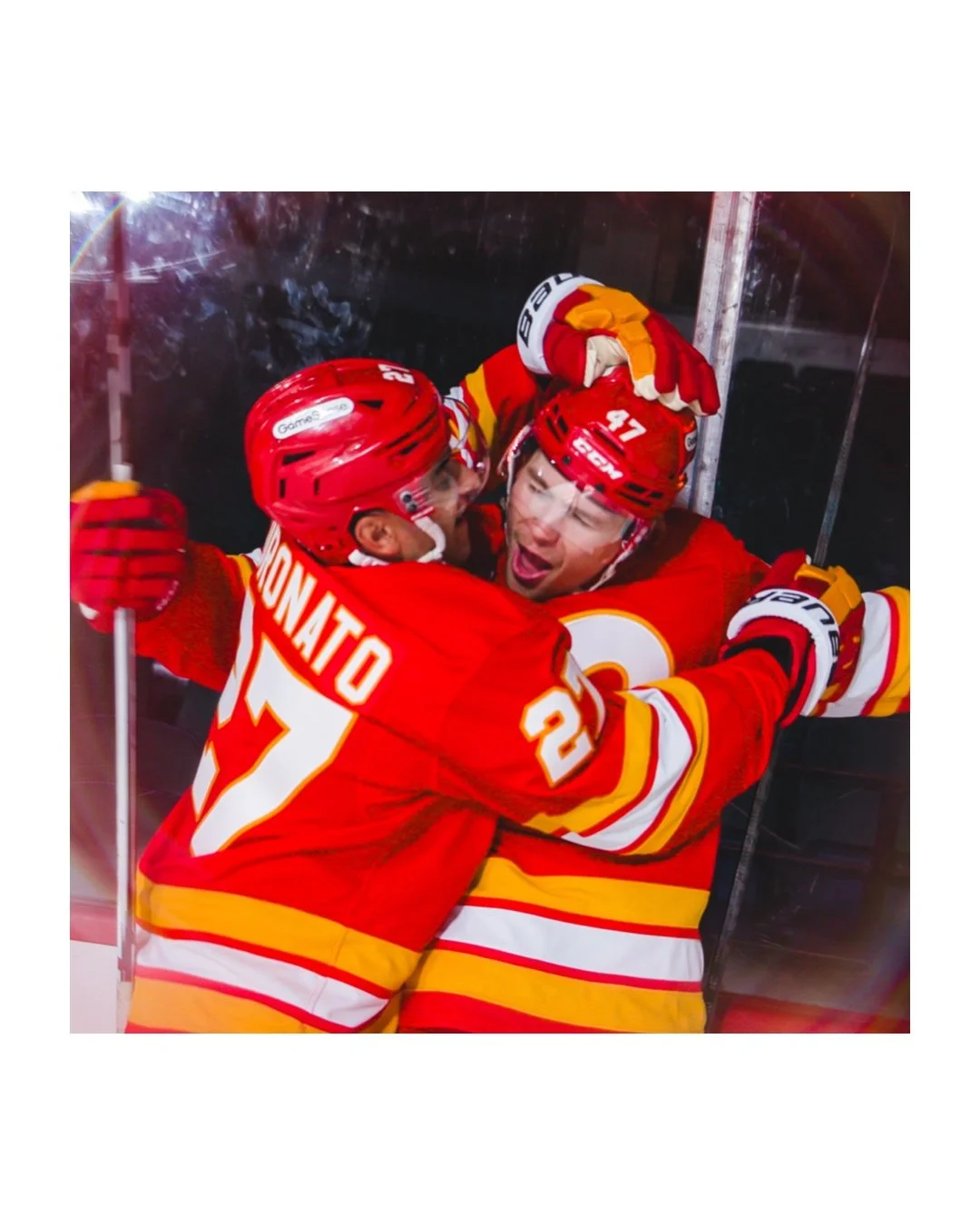
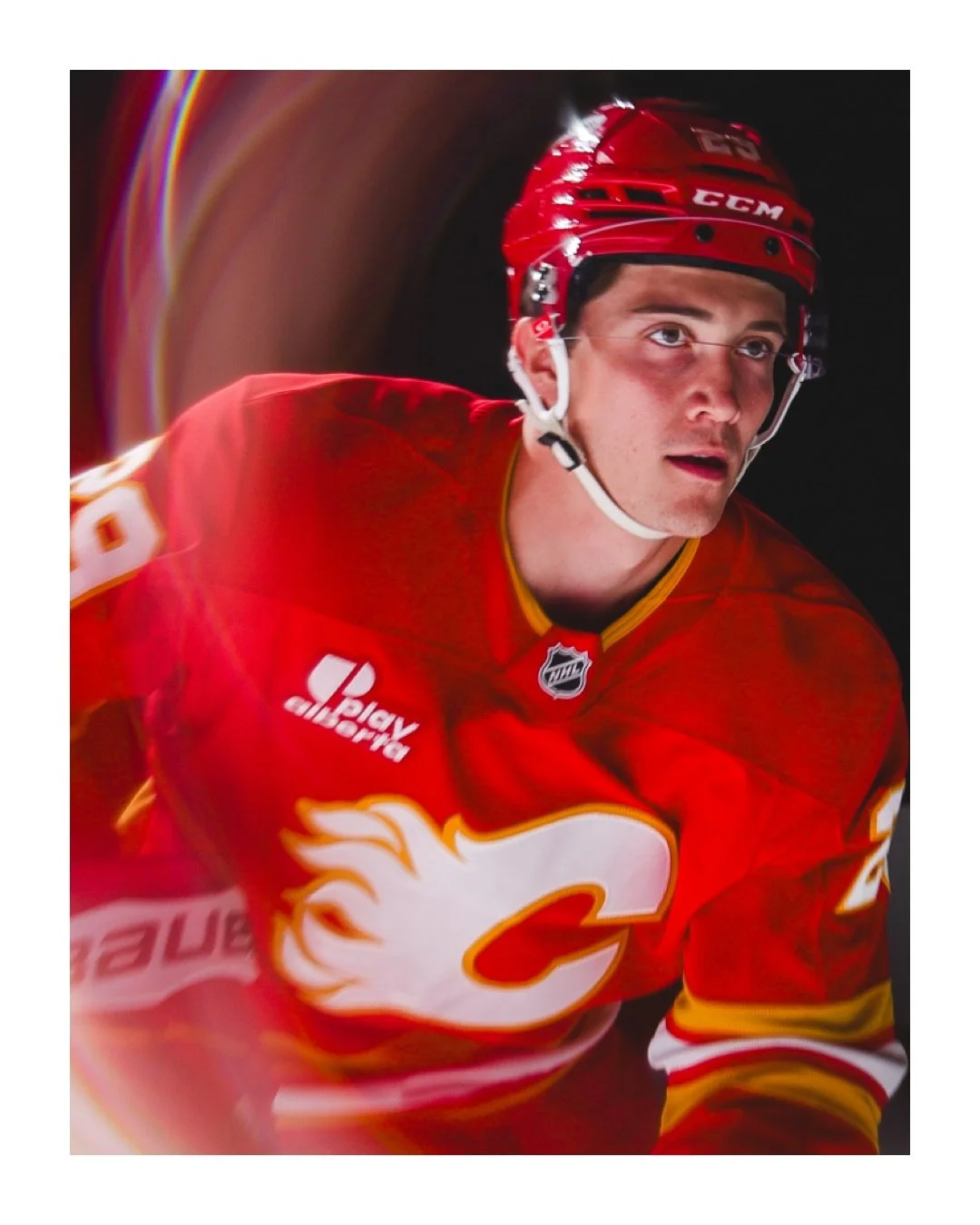
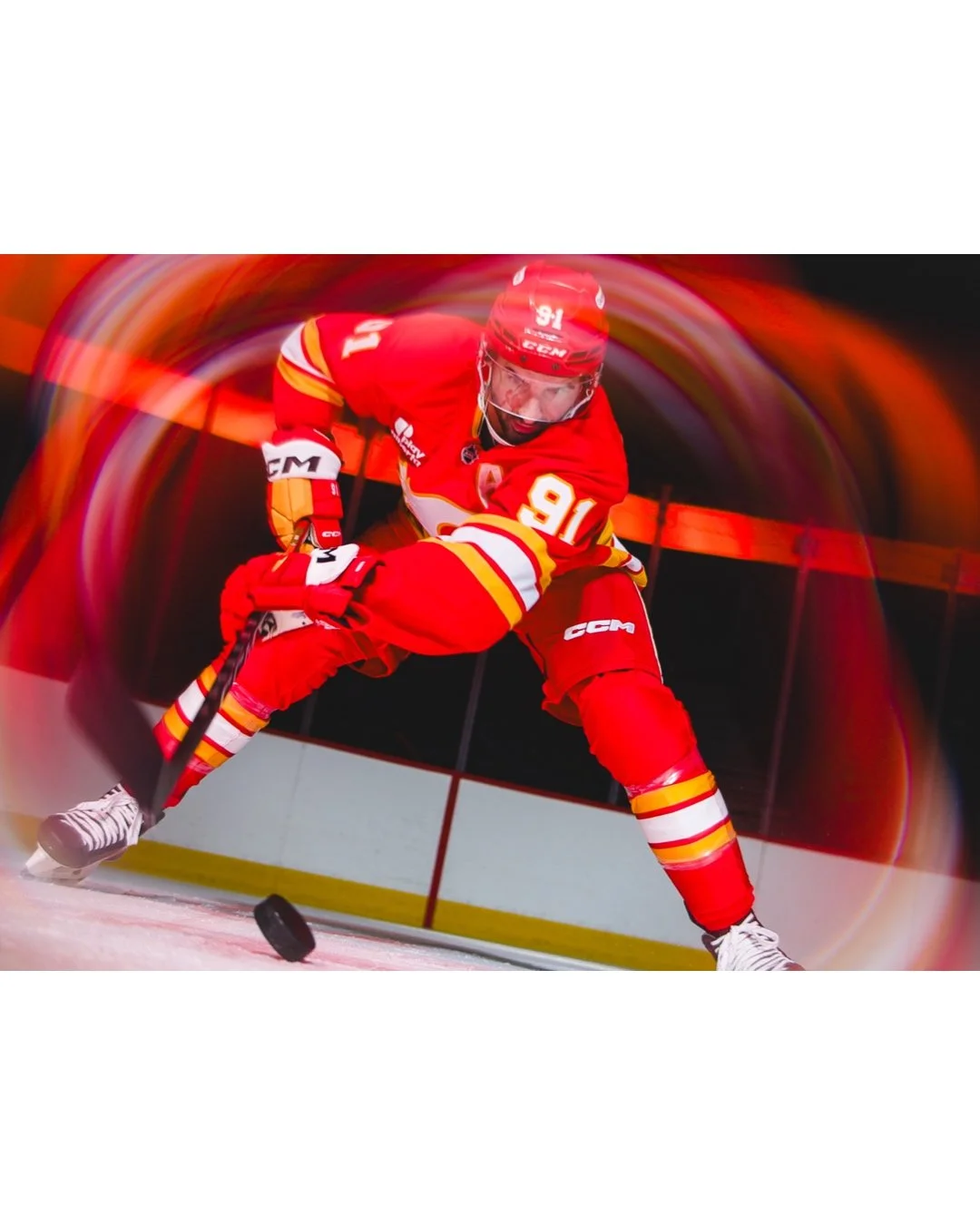
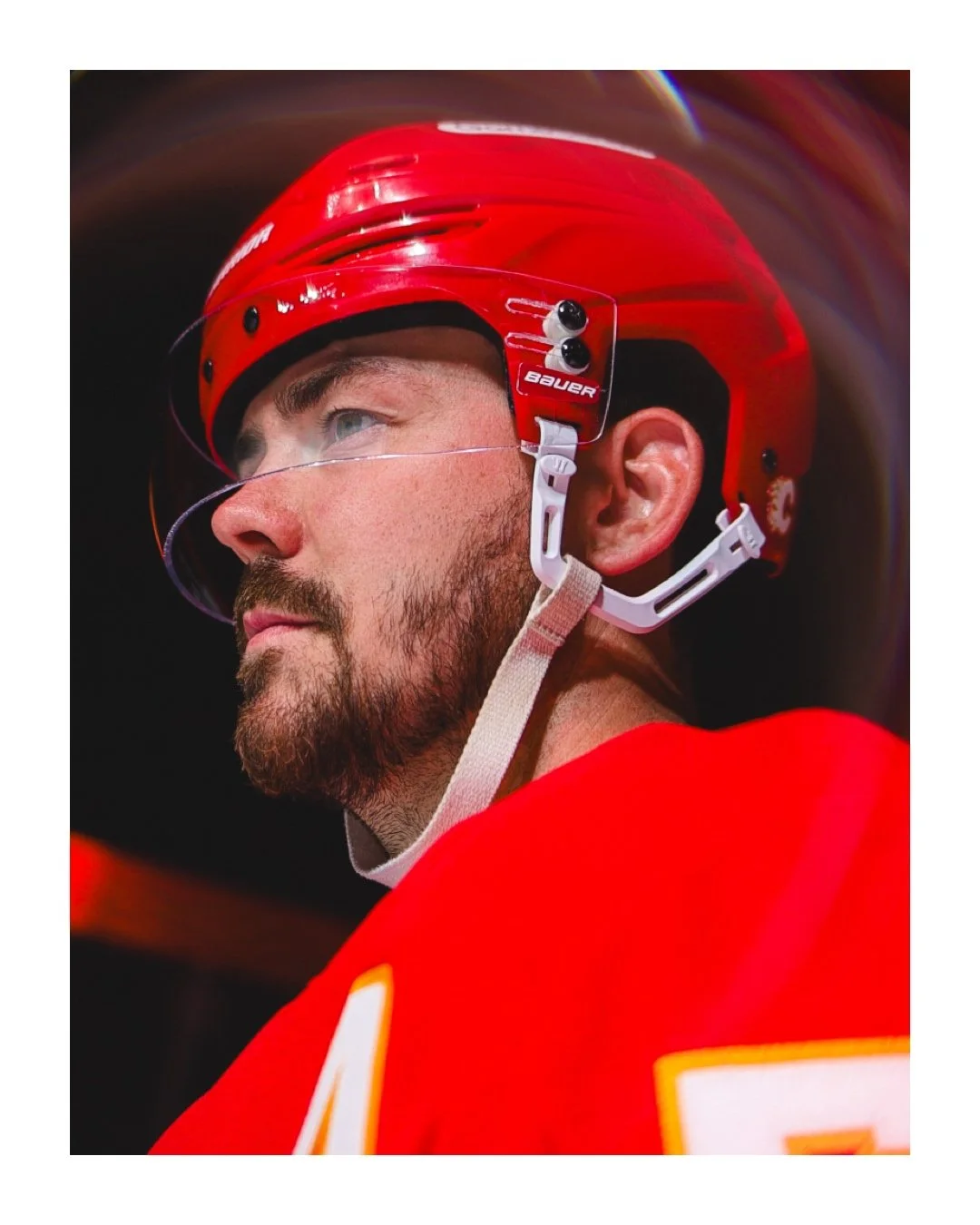
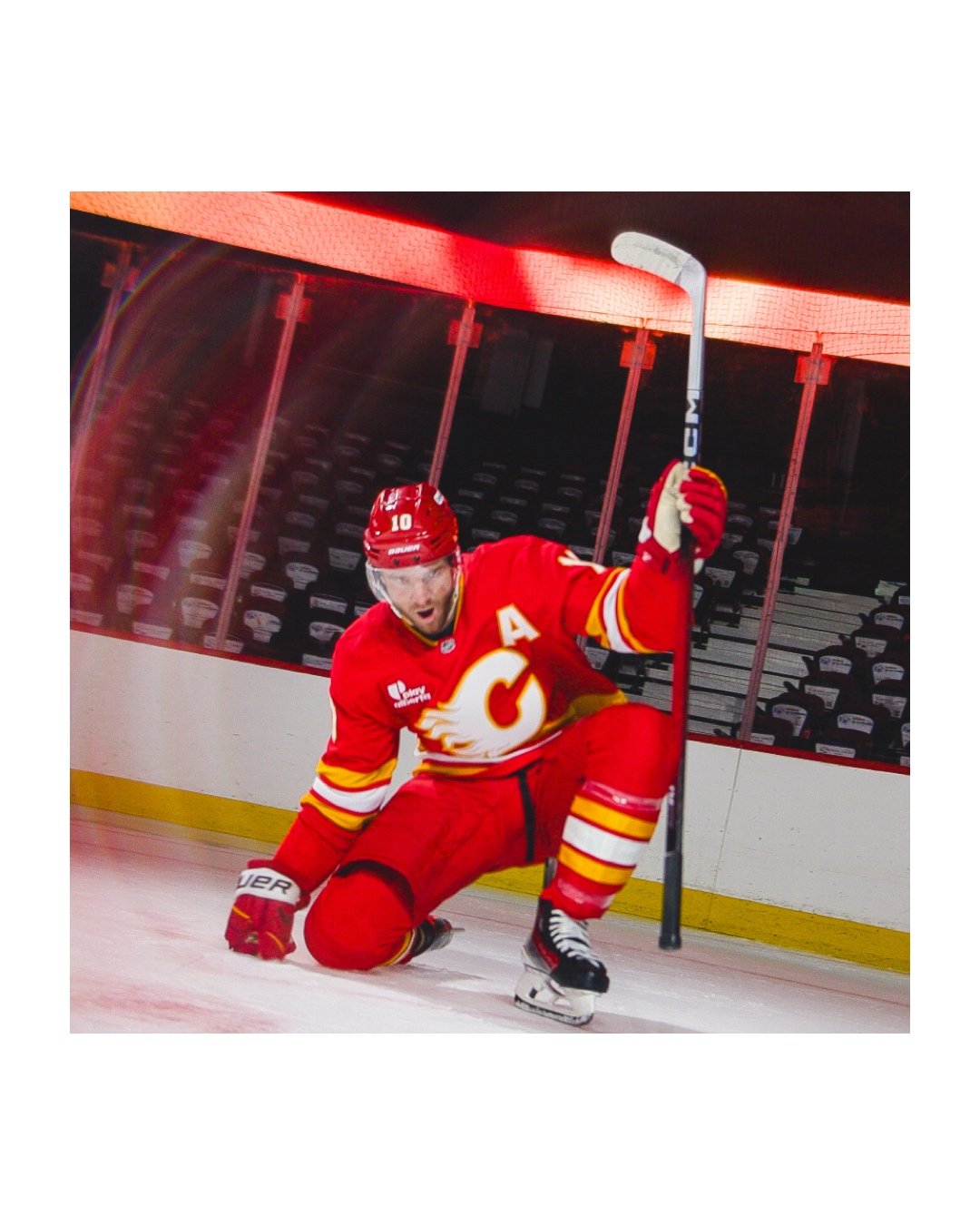
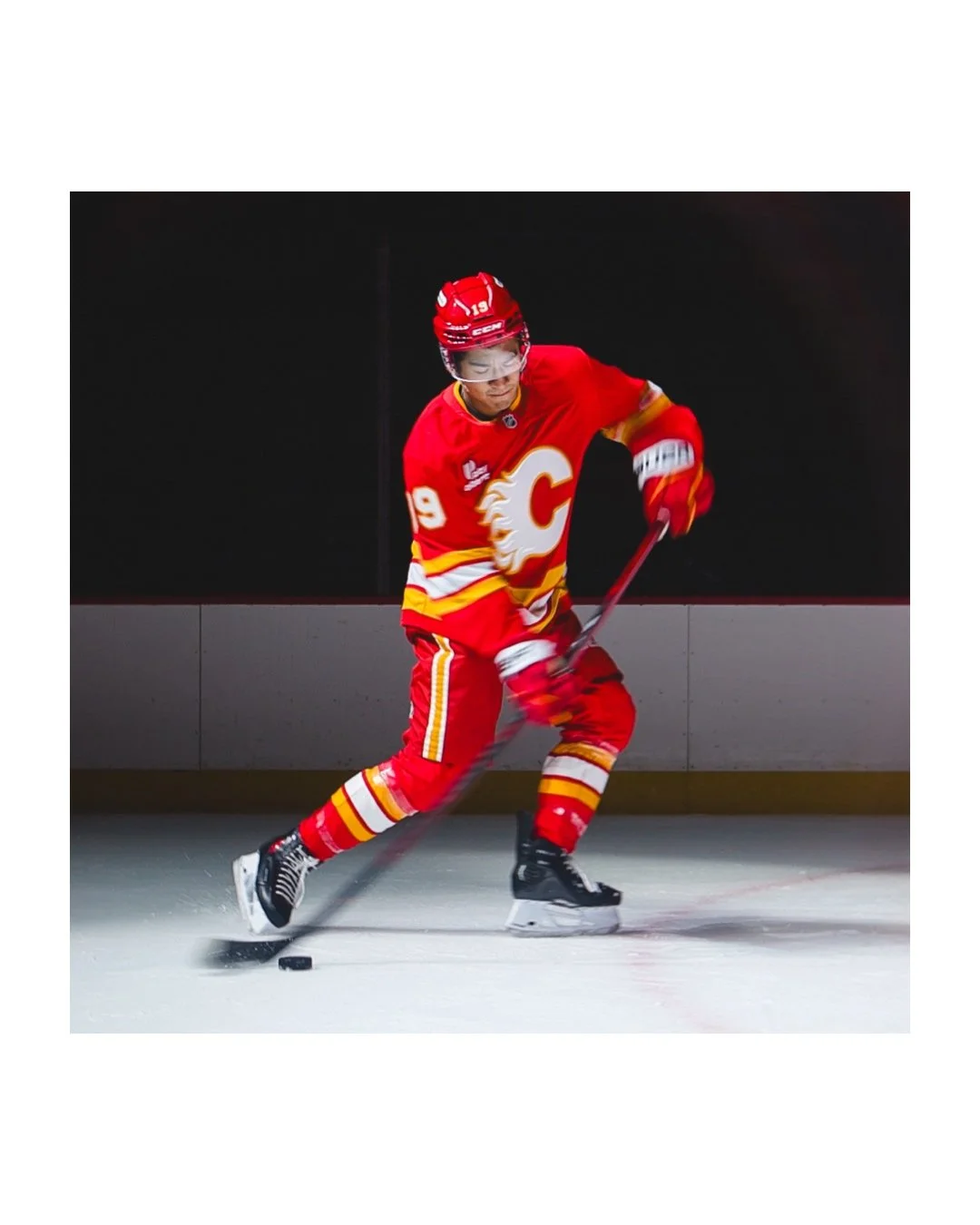
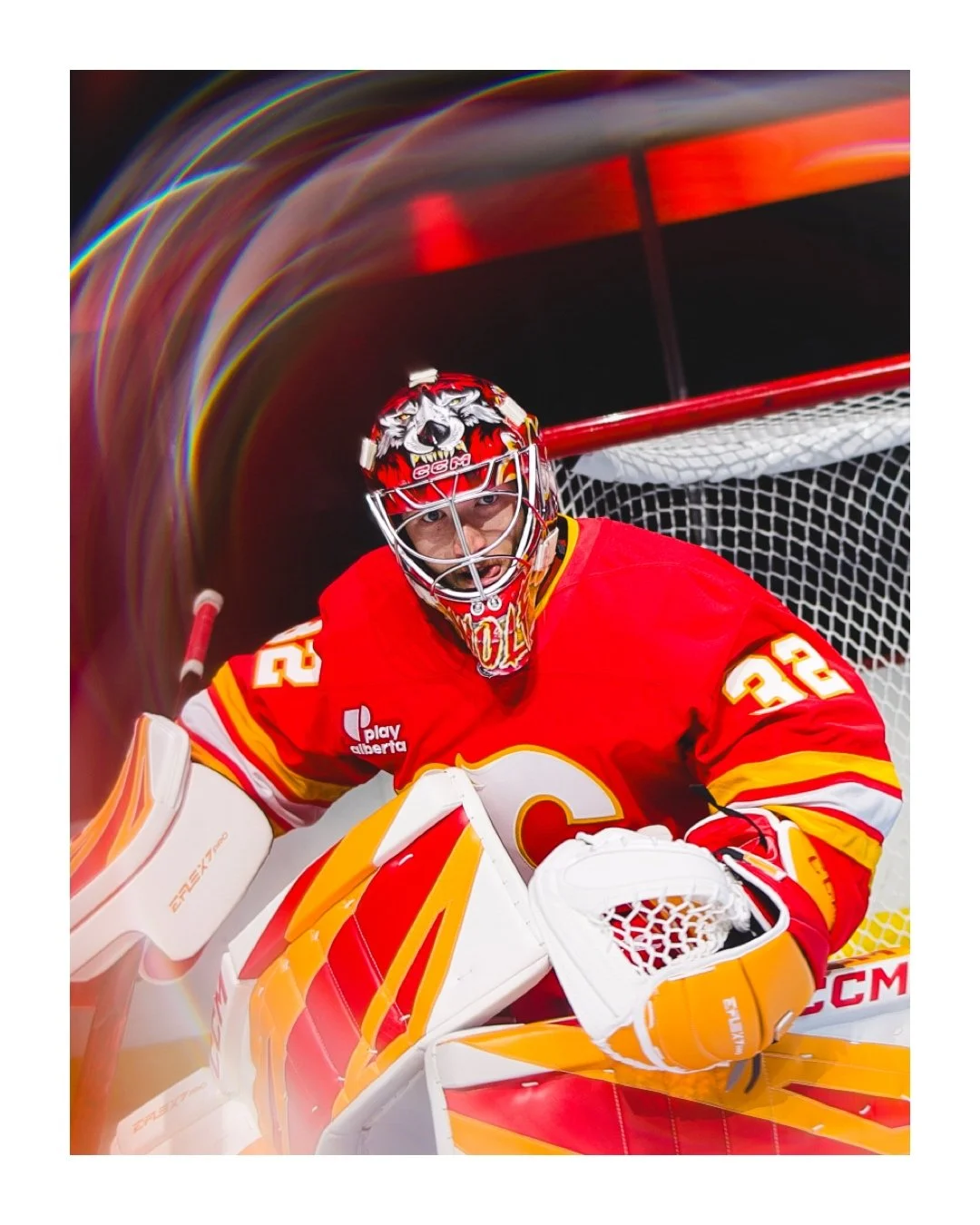
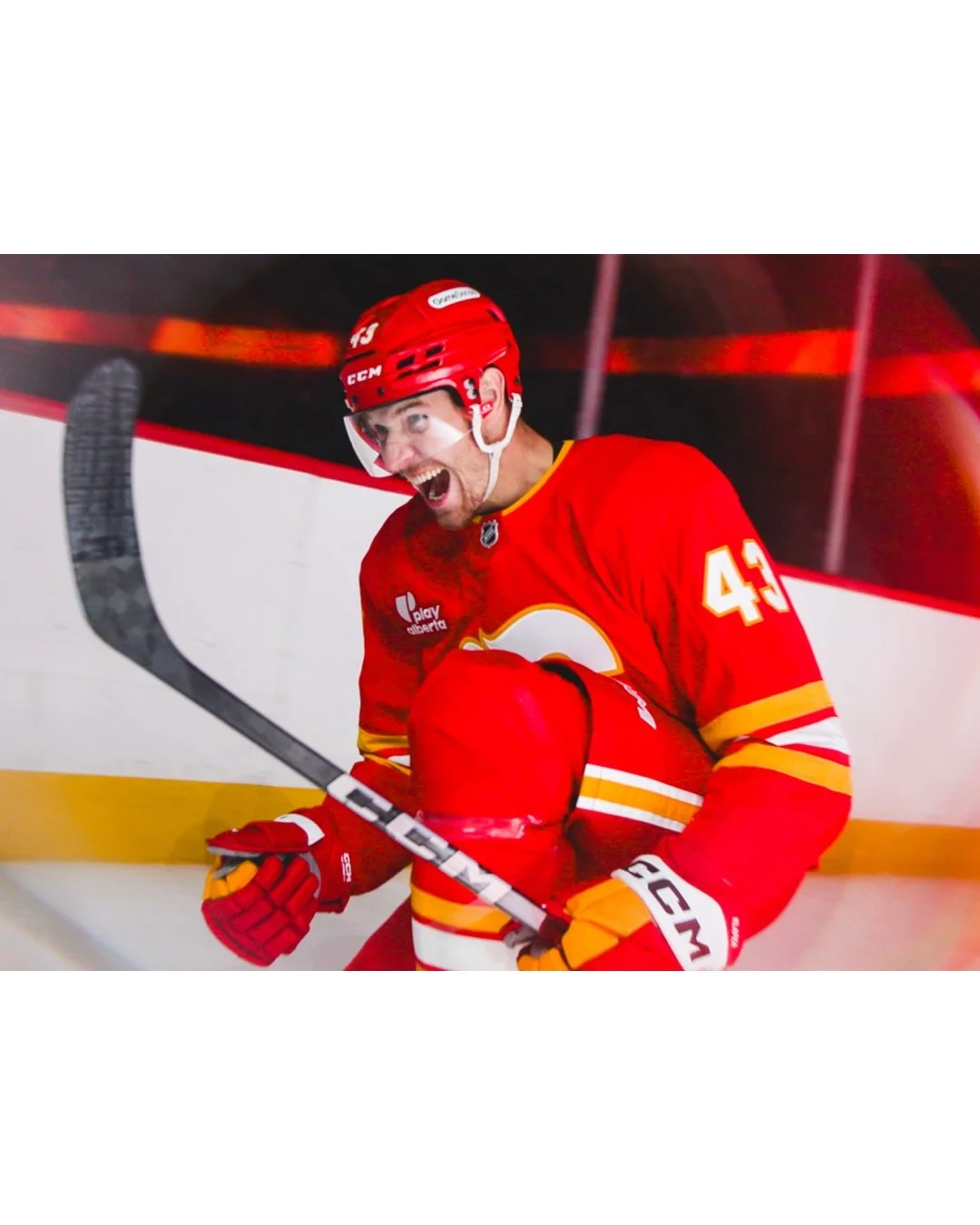
These images were pulled from video captured during Calgary Flames Media Day.
I selected specific frames in Premiere, exported them as 16-bit TIF files, and finished them in Lightroom. I hadn’t tried building final images this way before, but the results exceeded my expectations.
Since I didn’t have time to shoot dedicated stills, I experimented with exporting high-quality video frames instead. Shooting in 4K meant lower resolution than a traditional RAW photo, but Lightroom’s upscale feature helped close that gap.
Huge credit to the players for fully committing to the idea. Their buy-in made the images and video work.