Grandmother's Paintings
Disclaimer: This project focuses on the digital preservation of existing artwork. AI tools were used carefully as part of the process, with the goal of keeping everything as close to the original works as possible. No physical paintings were altered, and no new elements were added. In some cases, aspect ratios were adjusted slightly due to limitations of the source imagery or cropped reference material.
Throwback
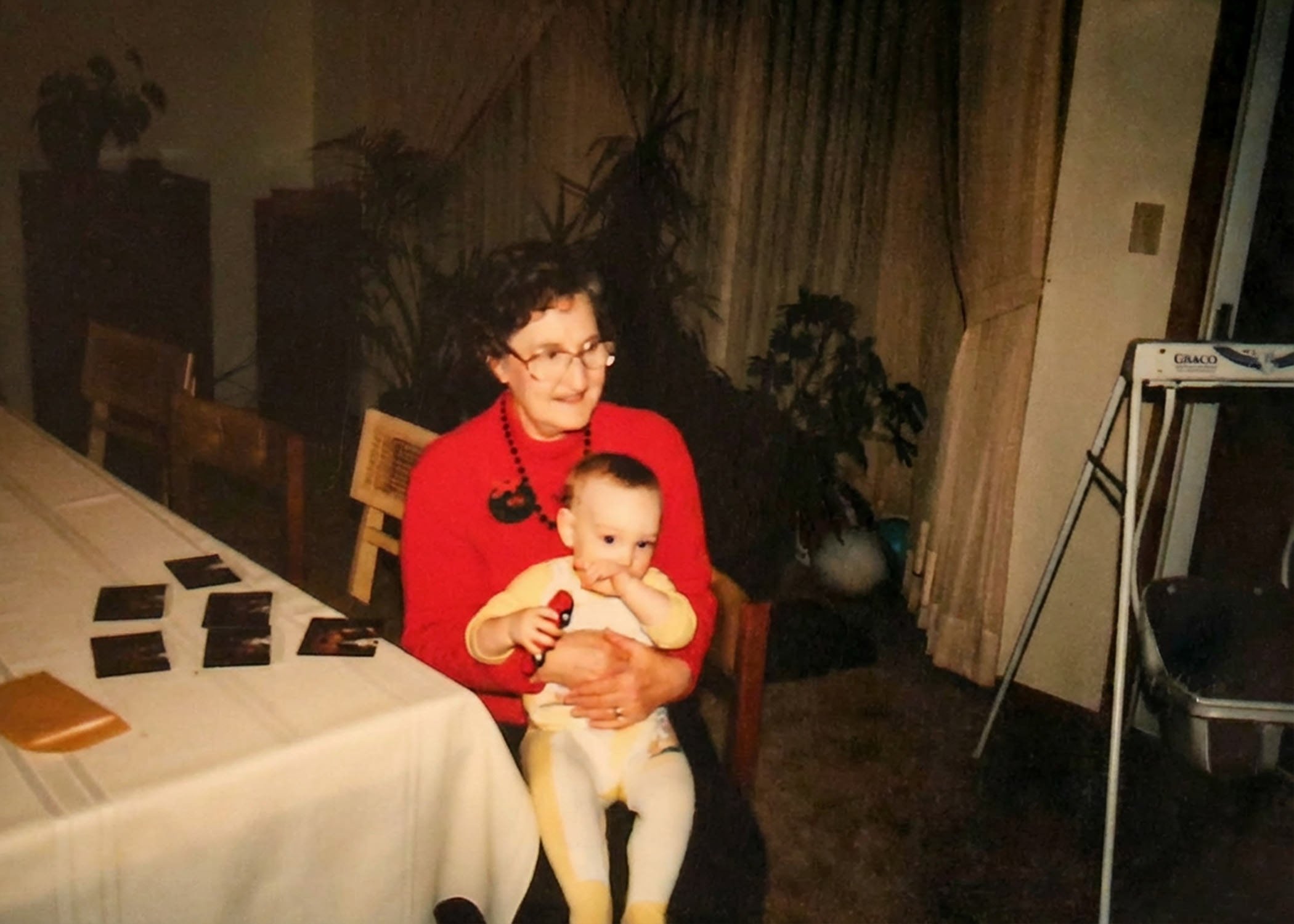
In recent years, I was given some of my grandmother’s old paintings. I immediately fell in love with them. Seeing her work up close made me want to learn more about her, not just as my grandma, but as an artist.
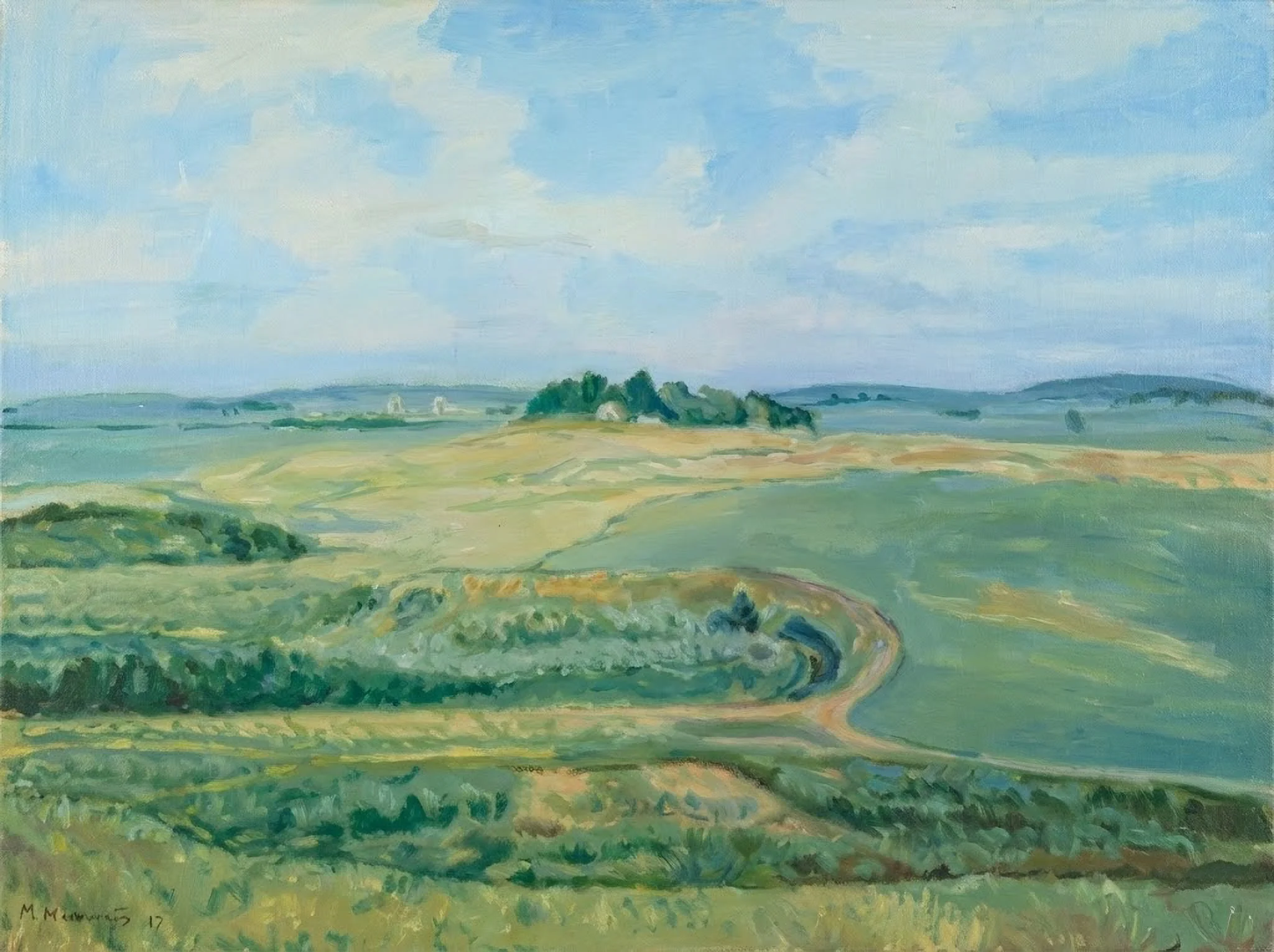
The first piece I was given was a painting of a prairie landscape with a huge, powerful blue sky. It has been hanging on my wall ever since. I wasn’t as close to her growing up as I probably should have been. We saw each other often, and she was always interested in my interest in art, but I wish more time had been spent learning from her.
She passed away when I was 14, right before I started getting serious about art, and well before I realized creativity could become my career.
Growing up, my mom and dad always said my creative mind came from her side of the family. Over time, especially while studying and refining her paintings, I found myself gravitating more toward still life and landscape photography. Looking back, that connection feels obvious now.
The Painting That Brought It Back
One of my favourite gifts I have ever received came from my Uncle Ron. He gave me a photo of a painting Mary did of the big hill at our old farm in Rockyford. The hill overlooked the farmhouse, and the image instantly brought back childhood memories I thought were long gone.
That painting now lives above my work desk, where I spend a lot of time noodling away on projects. It feels grounding to have it there.
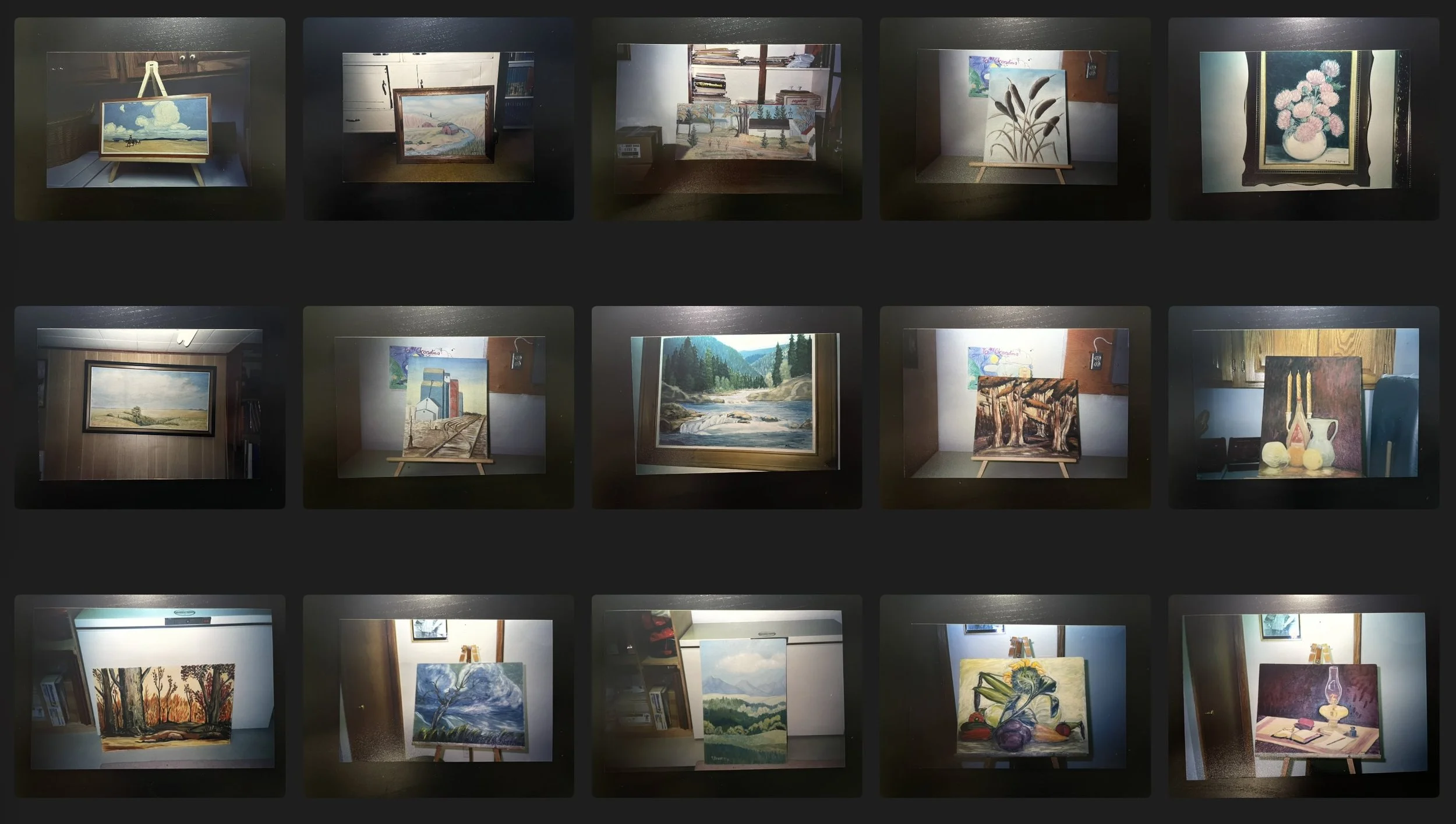
That same day, Uncle Ron also gave me a small photo album of Grandma Kenworthy’s paintings. As soon as I flipped through it, I felt like I needed to create a web presence so her work could be shared with the world.
The Problem With the Photos
This idea started a few years ago, but I quickly realized the reference photos were not strong enough to live on their own in a digital gallery. Many were faded, soft, poorly lit, or had degraded over time. Scanning them as is would have only preserved the flaws, not the work.
At the time, I wasn’t sure how to move forward. I didn’t want to fake anything, and I didn’t want to present the paintings in a way that felt careless or incomplete.
So the idea sat on the back burner.
Finding a Way Forward With AI
More recently, I started experimenting more seriously with AI tools.
There is a lot of controversy around AI and how it fits into the art world, and I understand why. For me, ChatGPT had already become part of my day to day workflow, mostly helping with writing and spelling. I struggled immensely with spelling growing up and still deal with dyslexia. Having a tool that helps me slow down, organize my thoughts, and feel more confident has been huge.
A few months ago, I started paying closer attention to tools like Google Gemini and the progress being made in image generation, especially within Photoshop. I was honestly floored by how fast things were moving.
At the same time, I question AI constantly. How much is too much. Where the line is. I don’t want it to replace me, anyone I’ve worked with, or human art in general.
The Moment It Clicked
The turning point came when I took an old photo of my dad’s truck and used AI to recreate it as a believable nighttime scene. It still felt like the same photo, just seen under different conditions.
That was the moment I realized I had the missing piece for this project.
I started testing Mary’s paintings using Google Gemini. I made sure to use the highest resolution photos I had as a reference guide, ensuring the restoration stayed true to her specific brushwork and color tendencies. Many of the original images were not in perfect focus or had broken down over time, so care and restraint mattered.
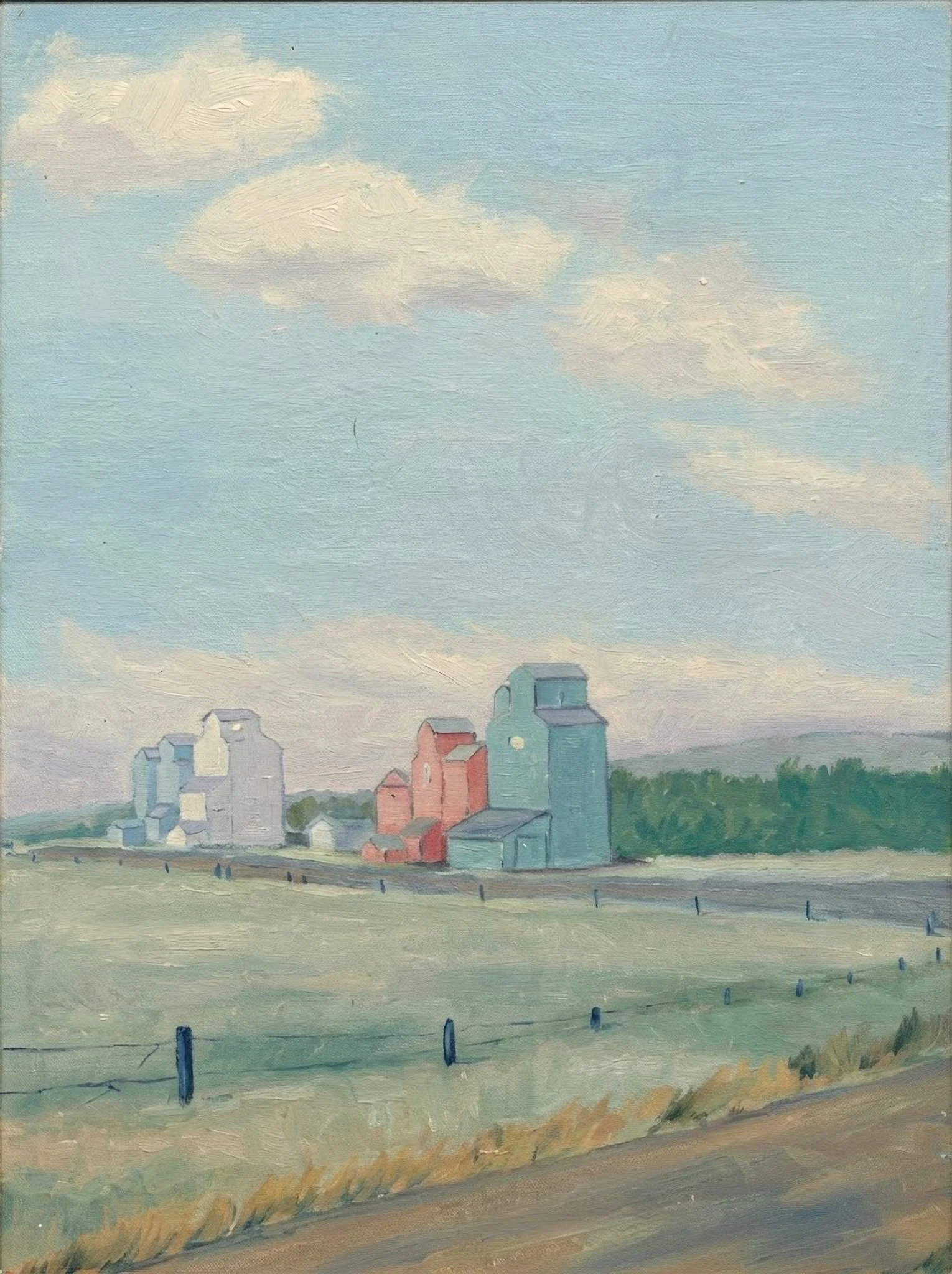
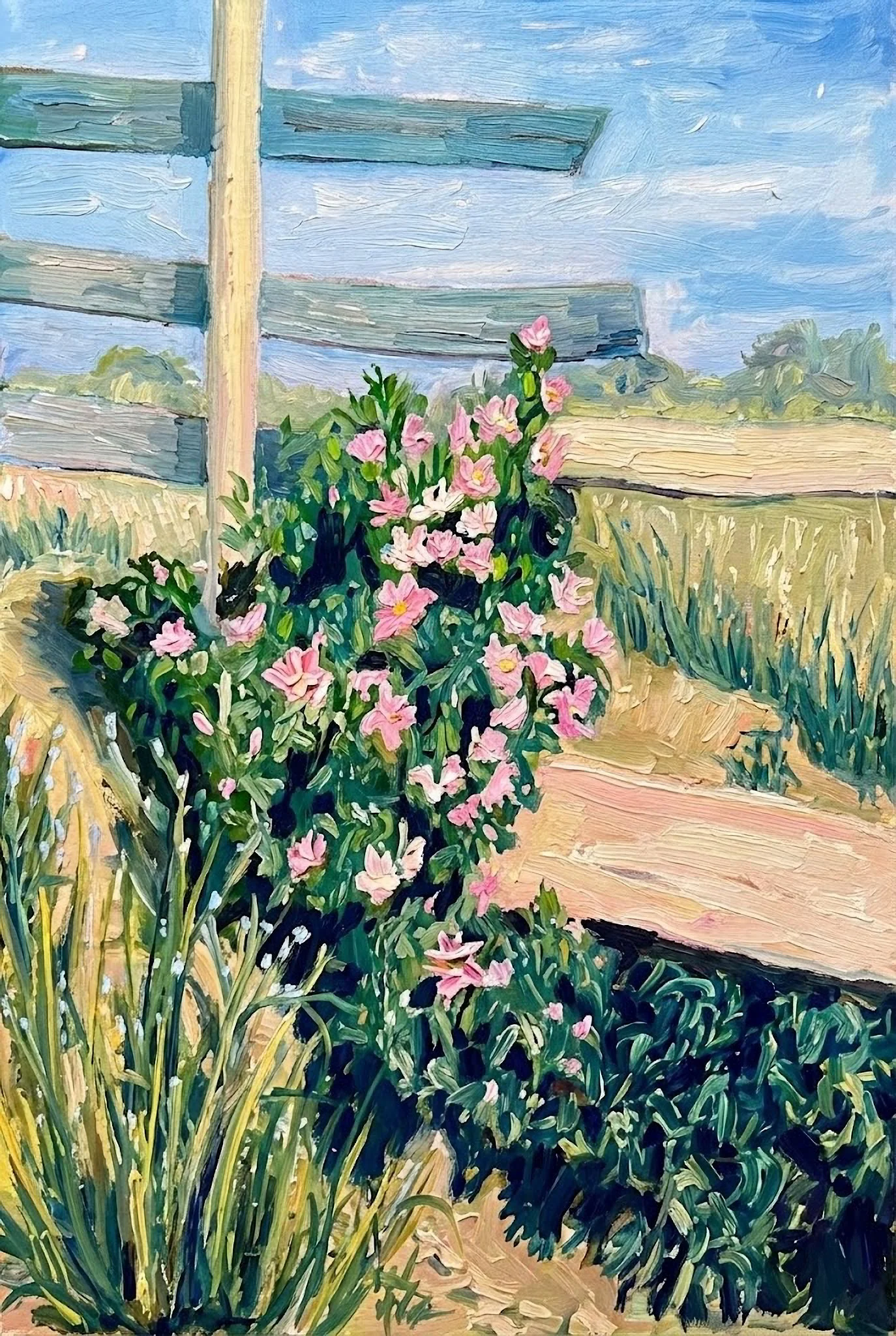
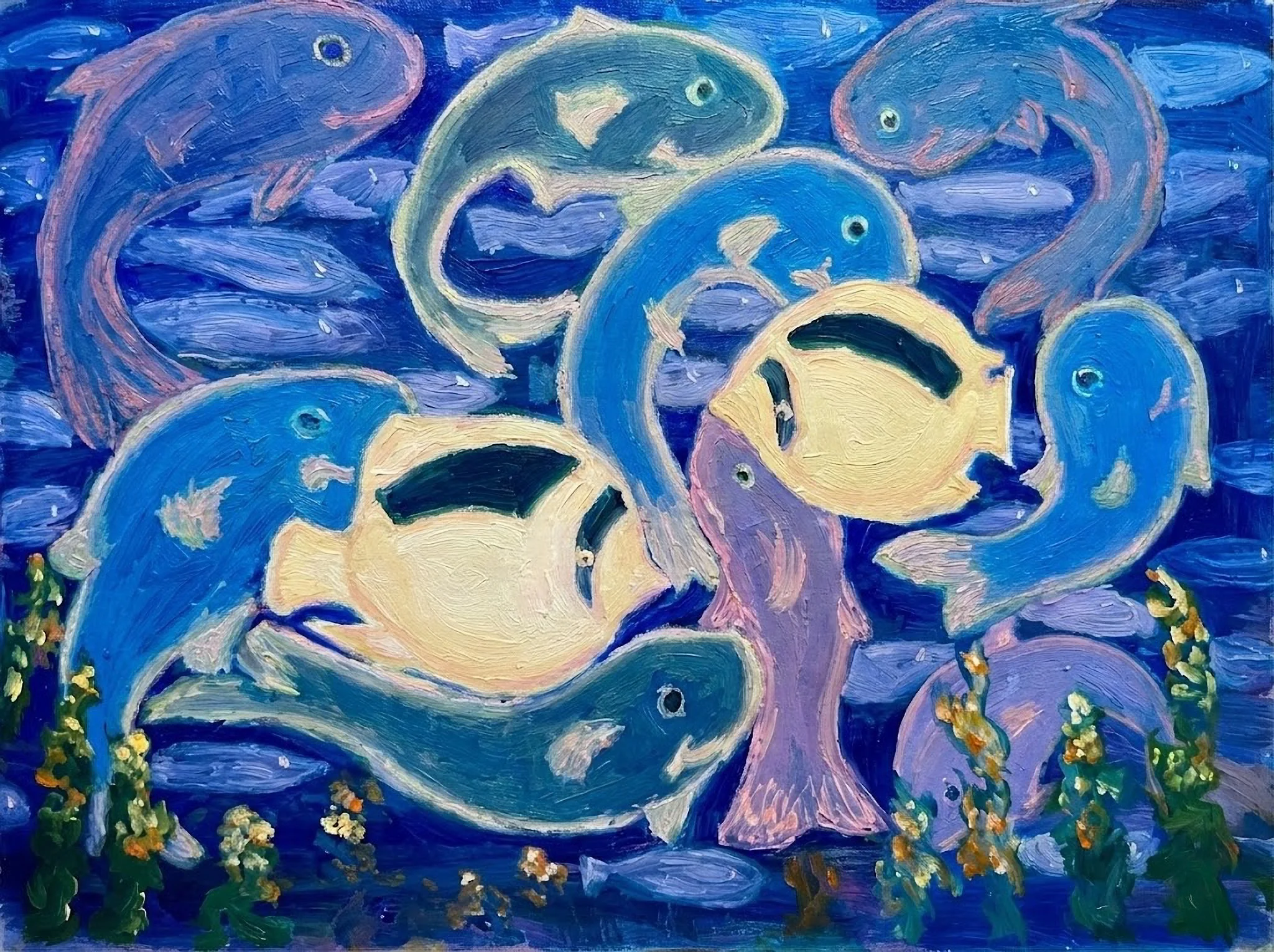
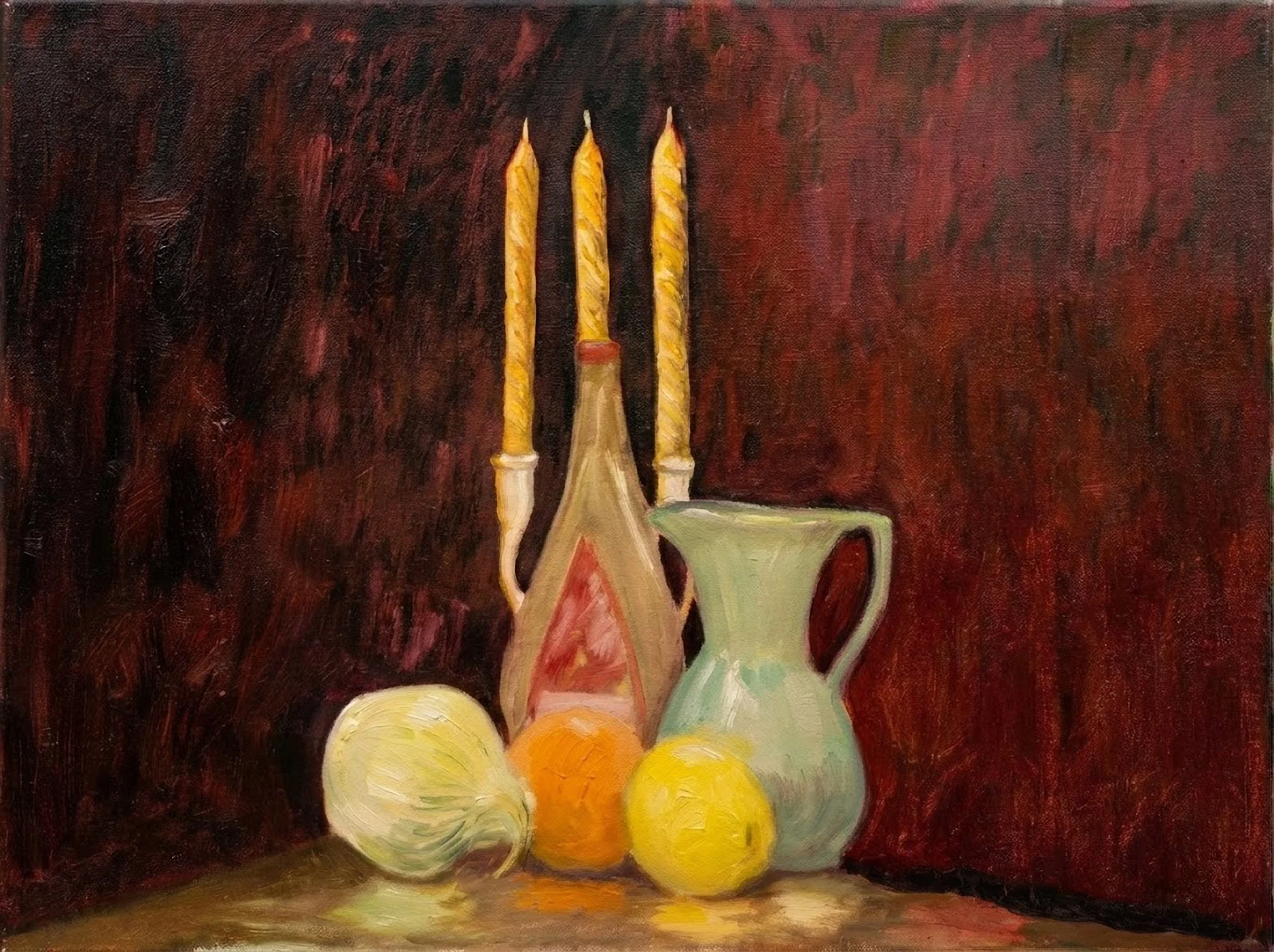
The Process
Once I had a workflow I trusted, I processed roughly 150 images over a single weekend. It wasn’t a passive process, though. I rejected countless generations that felt too 'smooth' or 'digital.' If the AI tried to fix a 'mistake' that Mary intentionally made, I tossed it. The goal was to keep the human element, imperfections and all.
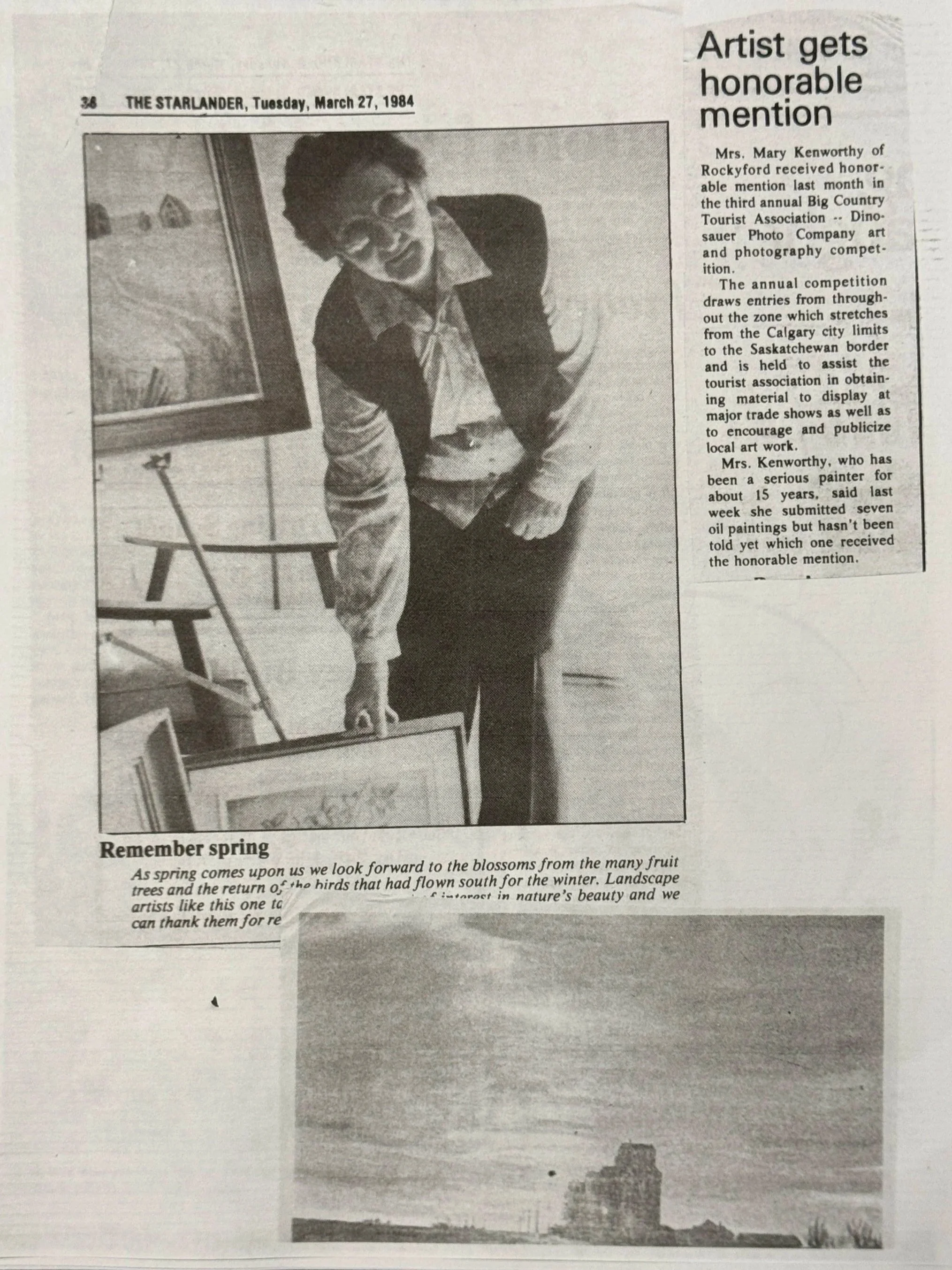
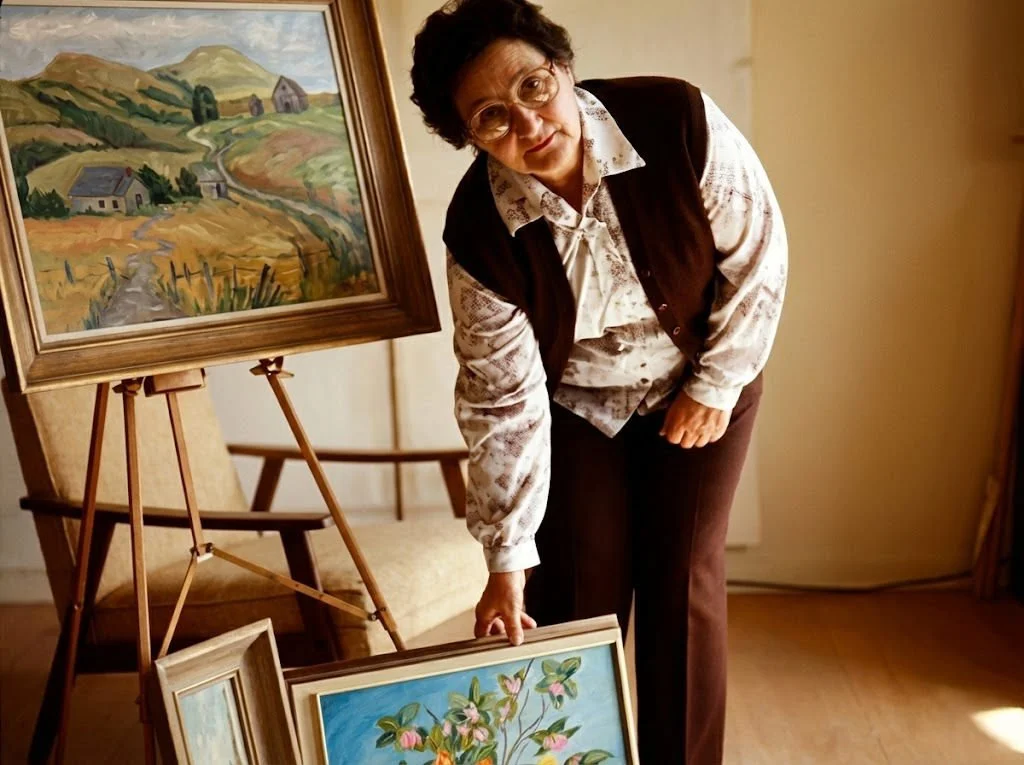
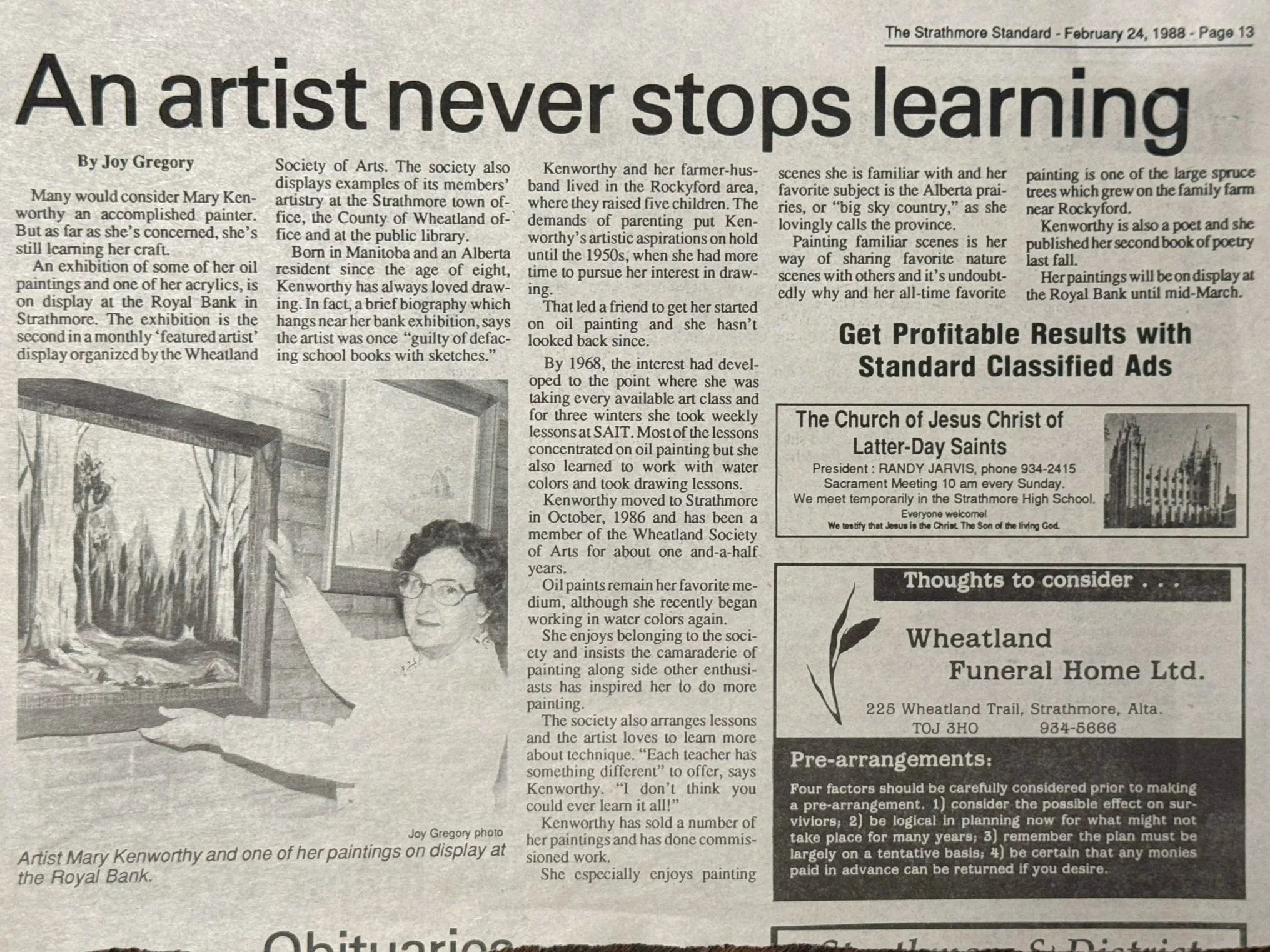
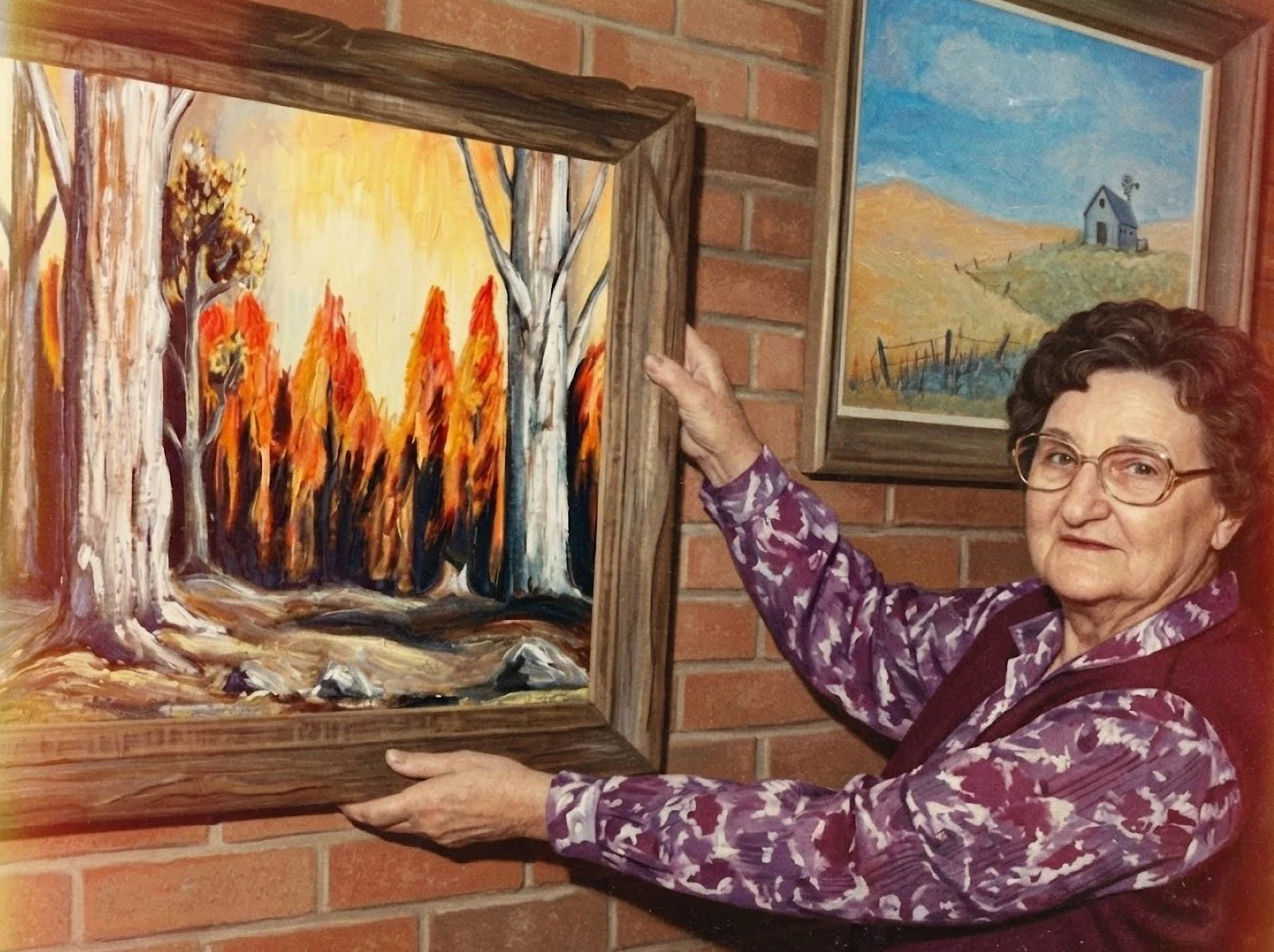
From there, I used Adobe Portfolio to build her website and spent time creating an Instagram page for the work. On the contact and about pages, I used the same approach to restore old newspaper clippings, bringing them back to life with colour and careful regeneration.
Nothing here was meant to modernize or rewrite her work. The goal was clarity and consistency while keeping everything as close to the original as possible, not reinterpretation. This is a digital preservation project only. The physical paintings themselves remain untouched and unchanged. In a few cases, aspect ratios were adjusted slightly due to limitations of the original reference images or areas that were cropped in the source material.
The reference photographs did not clearly capture readable signatures, so none appear in the digital versions. No signatures were removed from the original works, and the physical paintings remain exactly as they are.
I did feel conflicted about not adding signatures or watermarks to the digital images. The two original paintings I have on hand do include signatures, but they are extremely different from one another, and the images from her archive book were too small and soft to clearly see or match them. In the end, I chose to leave the images clean and let the artwork breathe and speak for itself, rather than adding a “watermark signature” that could feel overproduced or inauthentic to what would have originally been there.
To help guide the process, I also referenced two of her original paintings I had on hand, using them to better understand her brush strokes, overall style, and the colour palettes she tended to return to.
Mixed Feelings About Using AI
I should be honest about this part. I do feel conflicted that I couldn’t use real people to help with parts of this process.
The reality is that this was a self funded project. AI made it possible to do this faster and more affordably than I ever thought I could. Right now, I see AI as a powerful assistant I never had before. A tool to run ideas through, help organize thoughts, and in this case, help bring old artwork back into the light.
That doesn’t mean I’m comfortable with everything AI represents. It just means I’m trying to use it carefully and responsibly. I view this specific project much like a photographer digitally removing dust and scratches from a scanned film negative. I am not painting over her work; I am wiping away the degradation of time so you can see what was underneath.
Looking Ahead
In a perfect world, I would have loved to hire someone to help recreate the paintings, or even learn to repaint them myself. That isn’t the plan right now.
Someday, I would love to learn to paint properly. The idea of stepping away from a computer screen and creating something with my hands sounds refreshing.
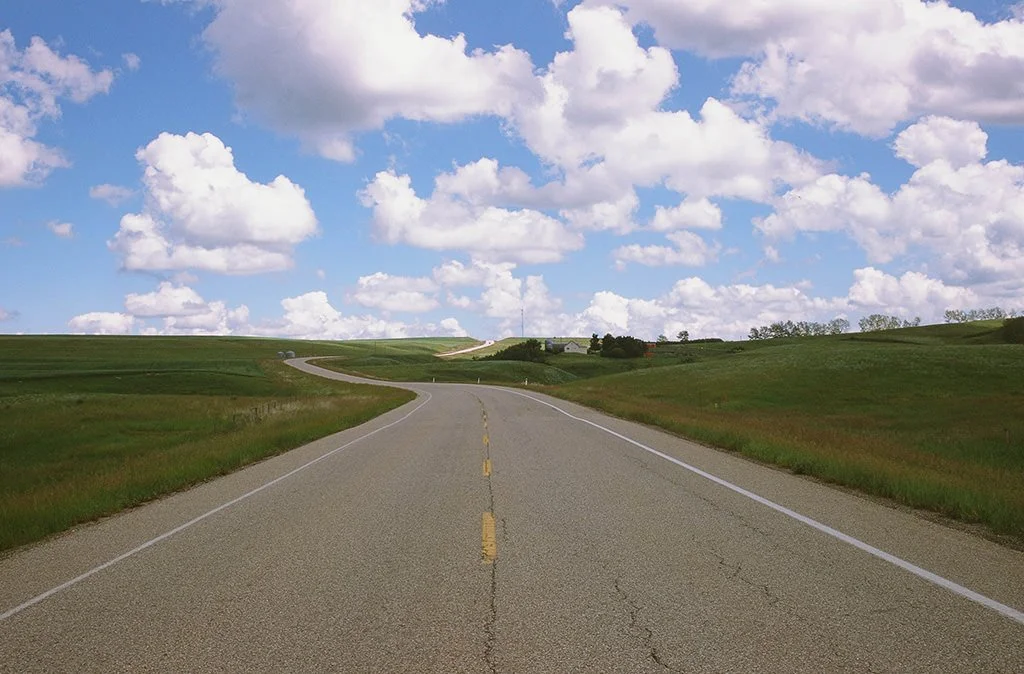
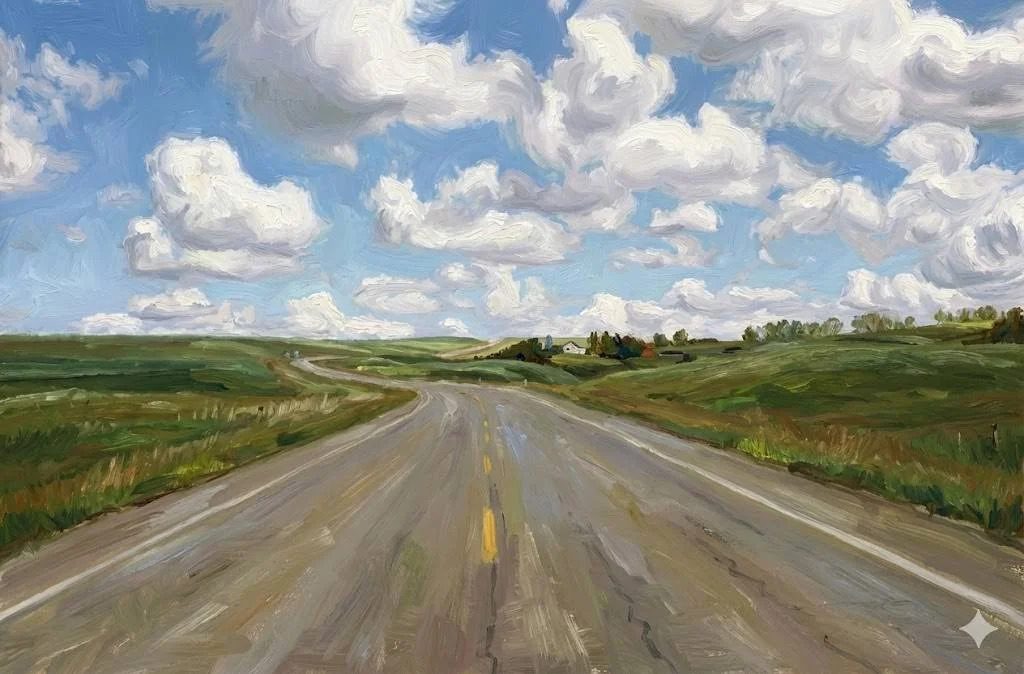
One idea I’m excited about moving forward is taking some of my own landscape photography and using AI to reinterpret it as if it were painted by my grandmother. Not as a replacement, but as a way to let her visual language live on in a new and fresh way.
To explore that idea, I took one of my film photographs and provided the AI with five different landscape paintings of hers, asking it to reinterpret the image using her style, brushwork, and colour tendencies.
Below is a small sample of that concept. The original photo was shot on slide film.
Final Thoughts
You can view the full website and read more about her story there. If you love prairie paintings, wide skies, and quiet rural scenes, I think you will connect with her work.
I’ve also created an Instagram account for her work, where I’ll be sharing pieces periodically over the coming years as this archive continues to grow. If you’d like to follow along, you can find it at @MaryKenworthyArt.
If you’re skeptical about AI, that’s fair. I only ask that you approach this project with an open mind and take it for what it is.
If you happen to own one of her paintings that is not shown here, I would love to hear from you. My goal is to document and preserve her work as completely as possible, and any pieces not currently included would help build a more accurate record of her artistic life.
More than anything, I hope my grandmother would be proud of this project. I like to think she would have found it fascinating that modern technology could help her artwork breathe new life, reach new people, and continue to be seen in a way that feels thoughtful and respectful.